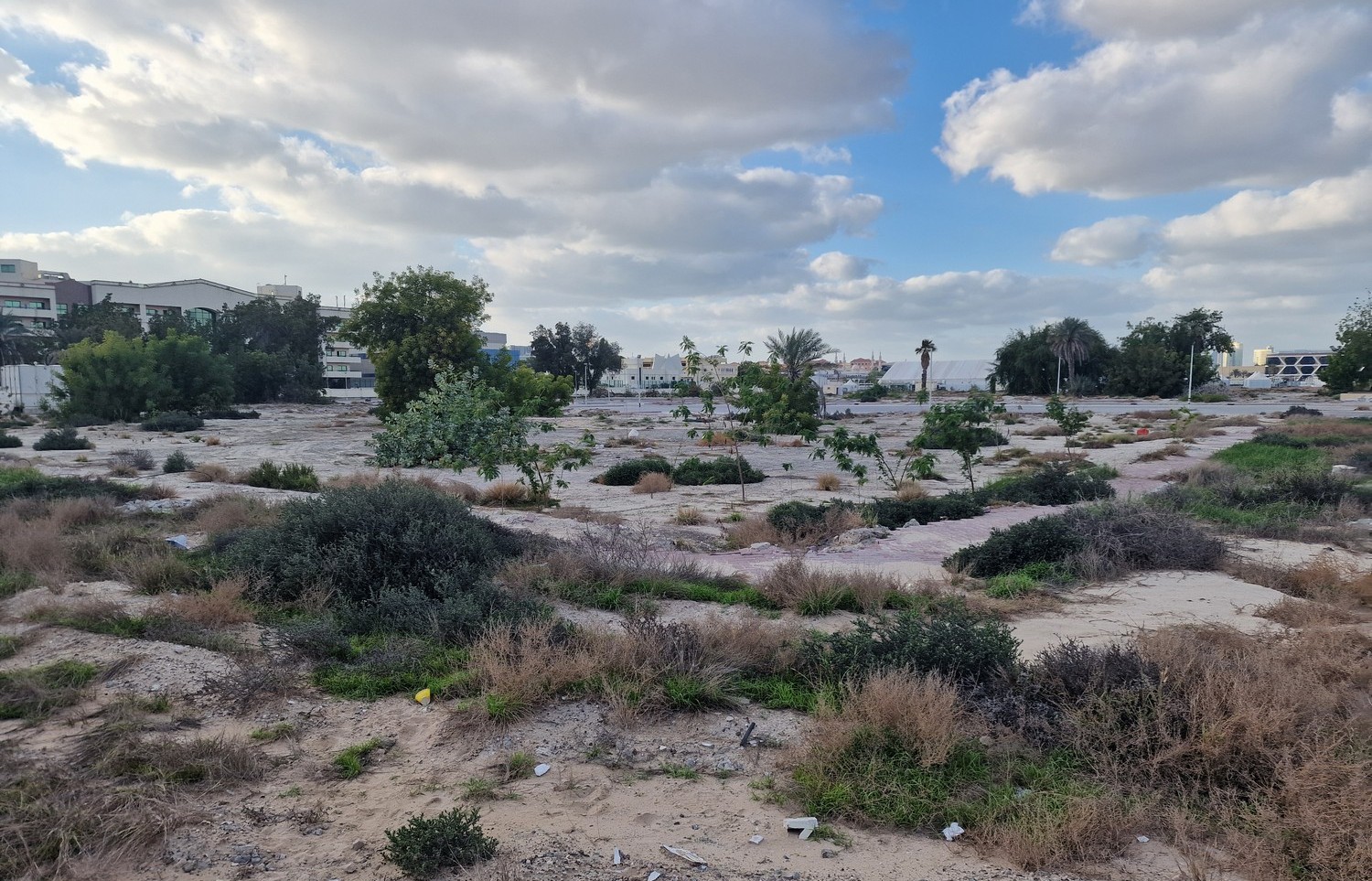
On my recent visit to Dubai, I found another Brownfield site (abandoned development might be more accurate) where some interesting natural regeneration is occurring. Like most such places, it is presumably awaiting redevelopment. This particular area is located in Bur Dubai, next to Creek Park. If you’ve read any of my older posts, you will know I make a study of such places, for they are great indicators of emergent hybrid ecosystems, which are the world’s future resilience. I’ll put links to some other articles at the end of this one.
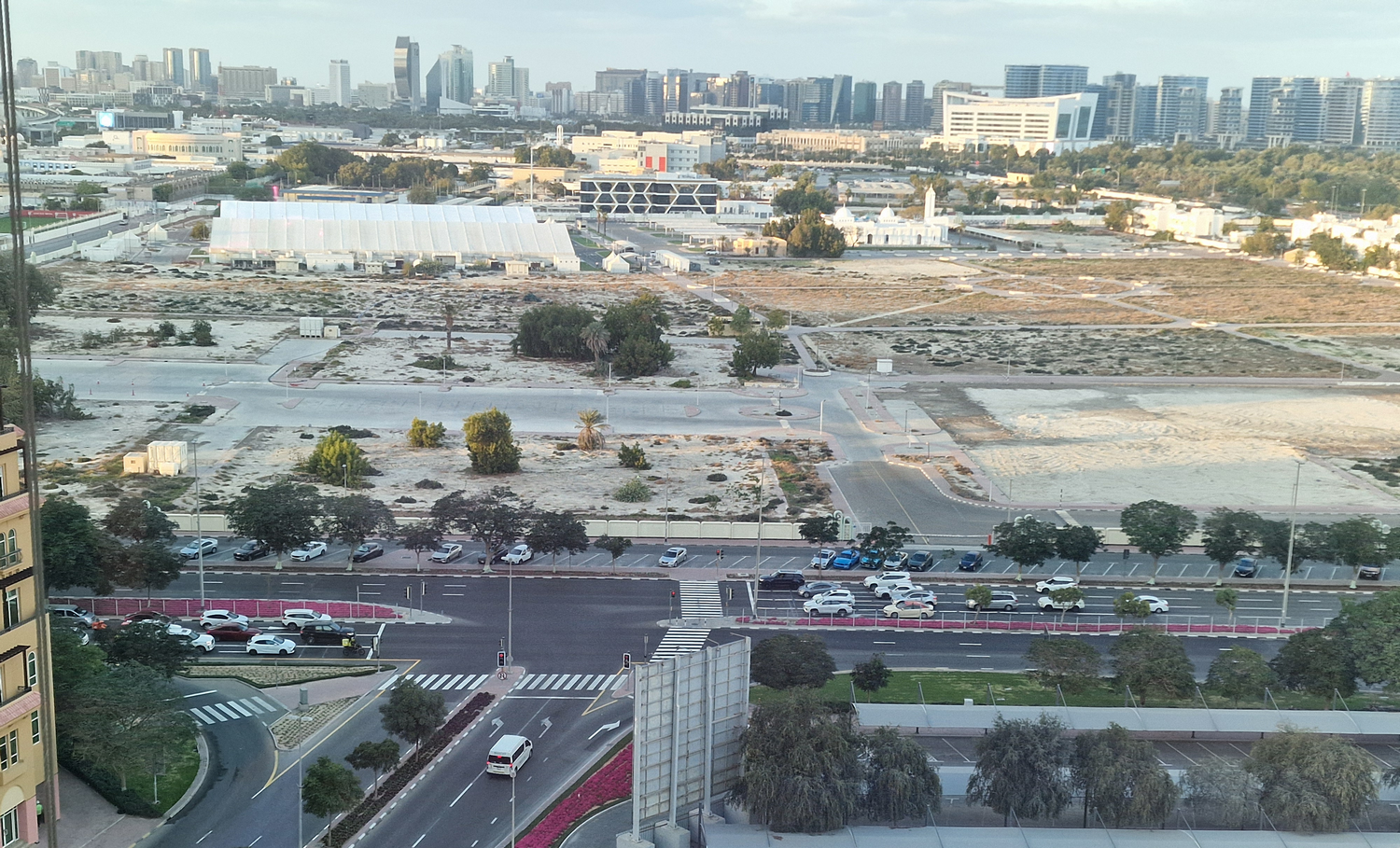
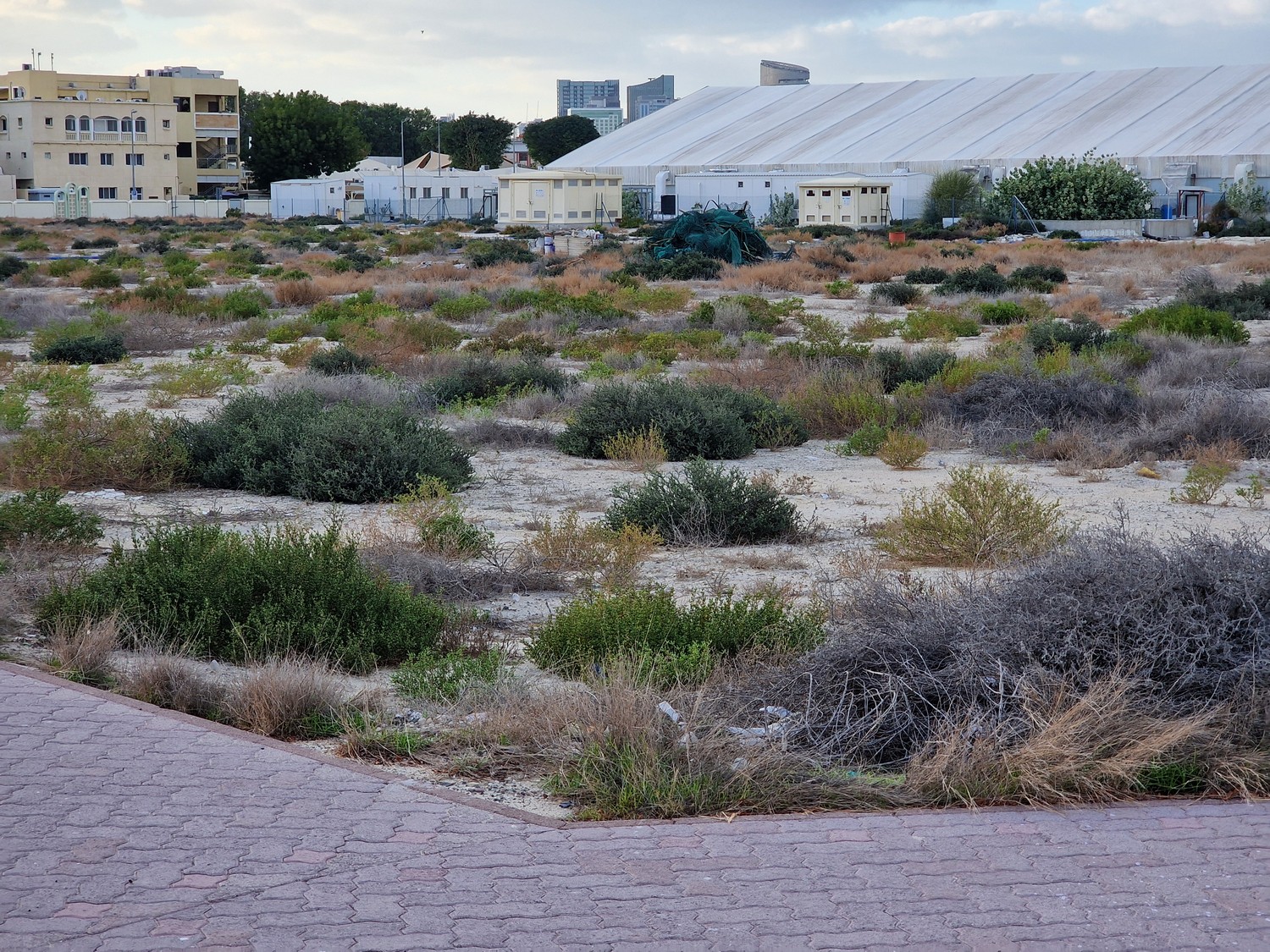
I can’t find any information about the site, it is gated, with roads, paths and benches laid out, that look like they have been there for years, but not maintained. There are some occupied flats in one area and other buildings, including a mosque, but the central part remains open and undeveloped. Presumably, it’s a project that was not completed. What caught my interest was the species of trees which are spontaneously emerging on some parts of the site. This is not obvious until you enter on foot, as you can see from the pic above. Even then, many people might not notice what’s going on.
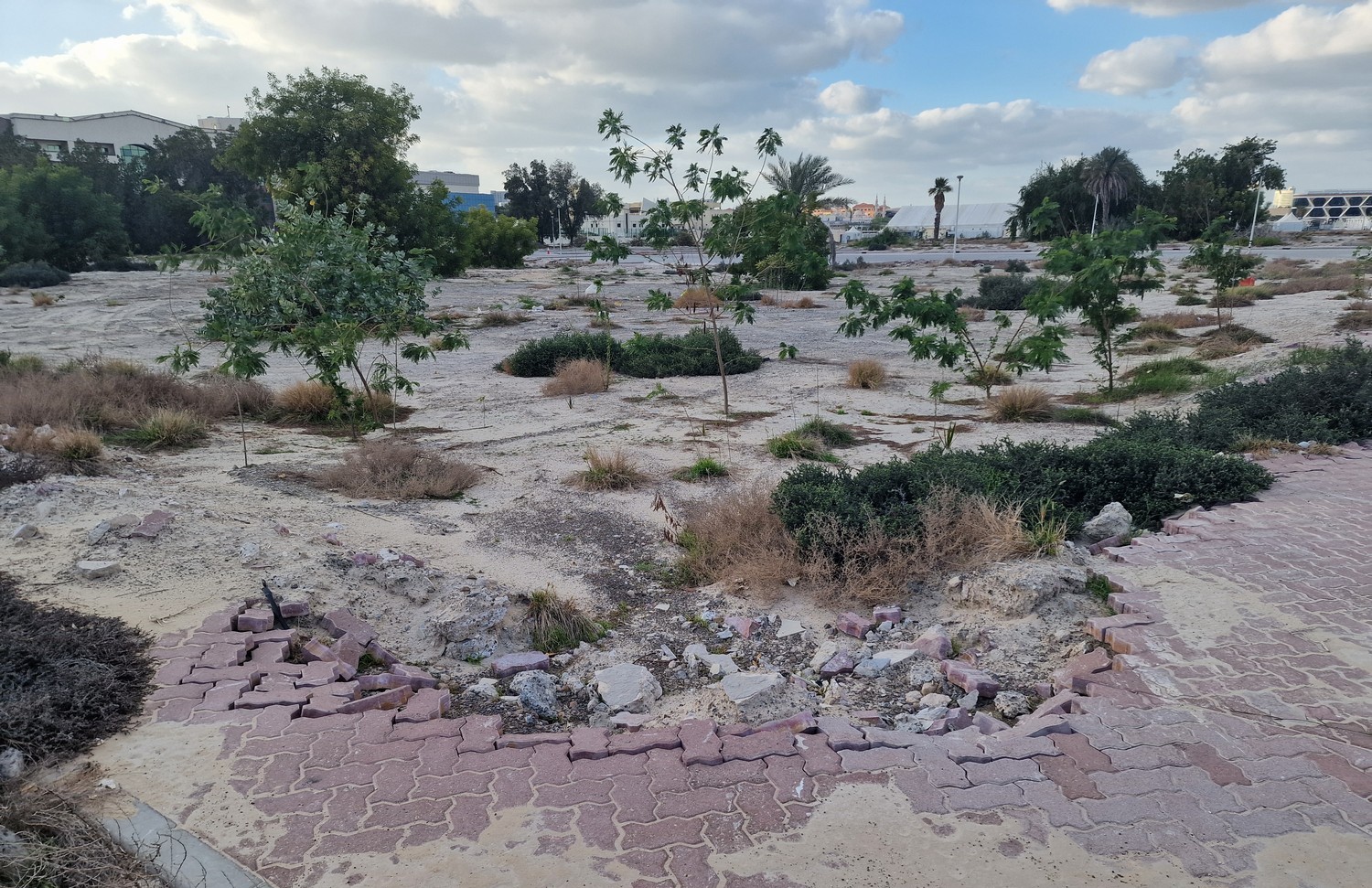
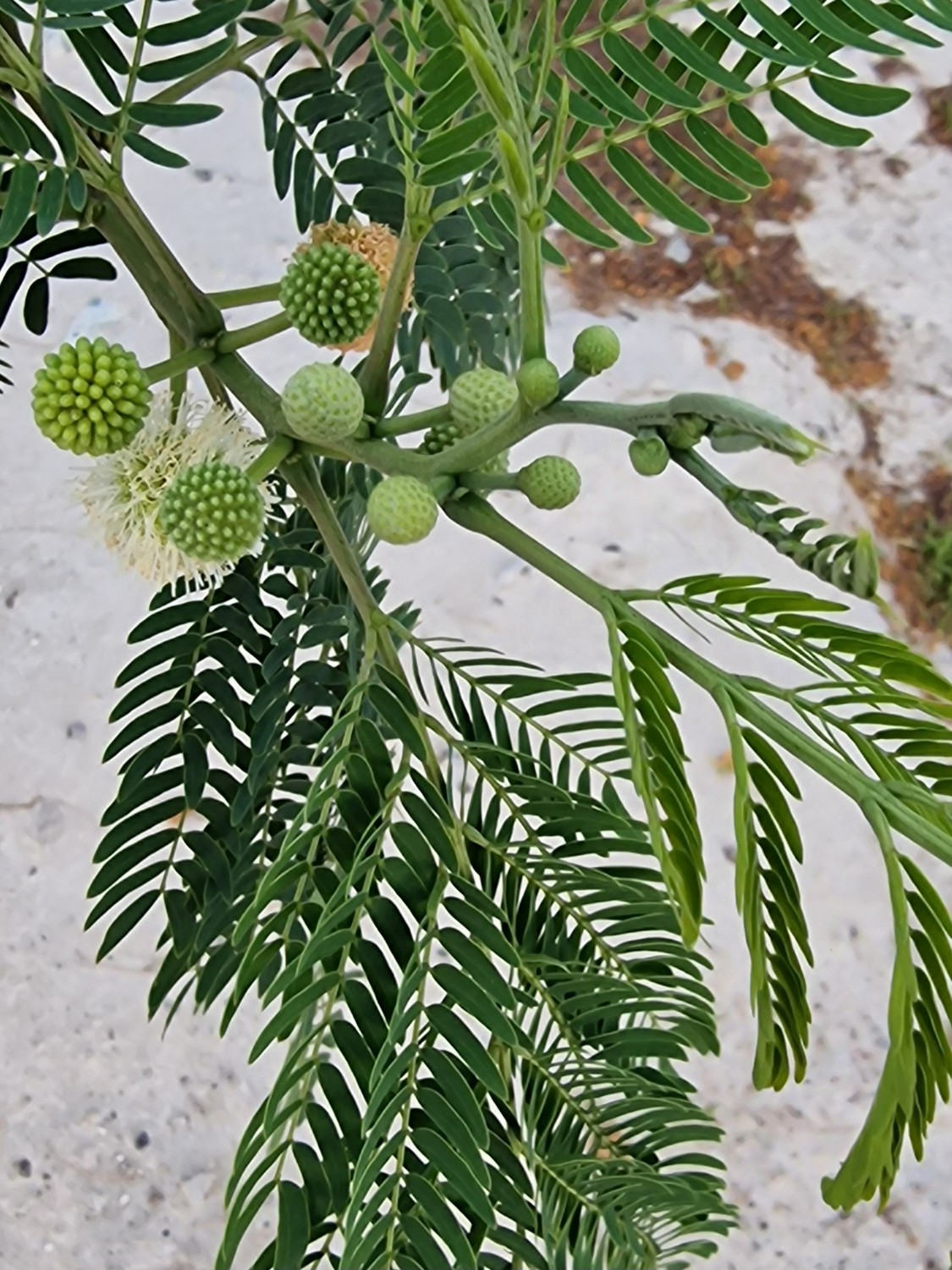
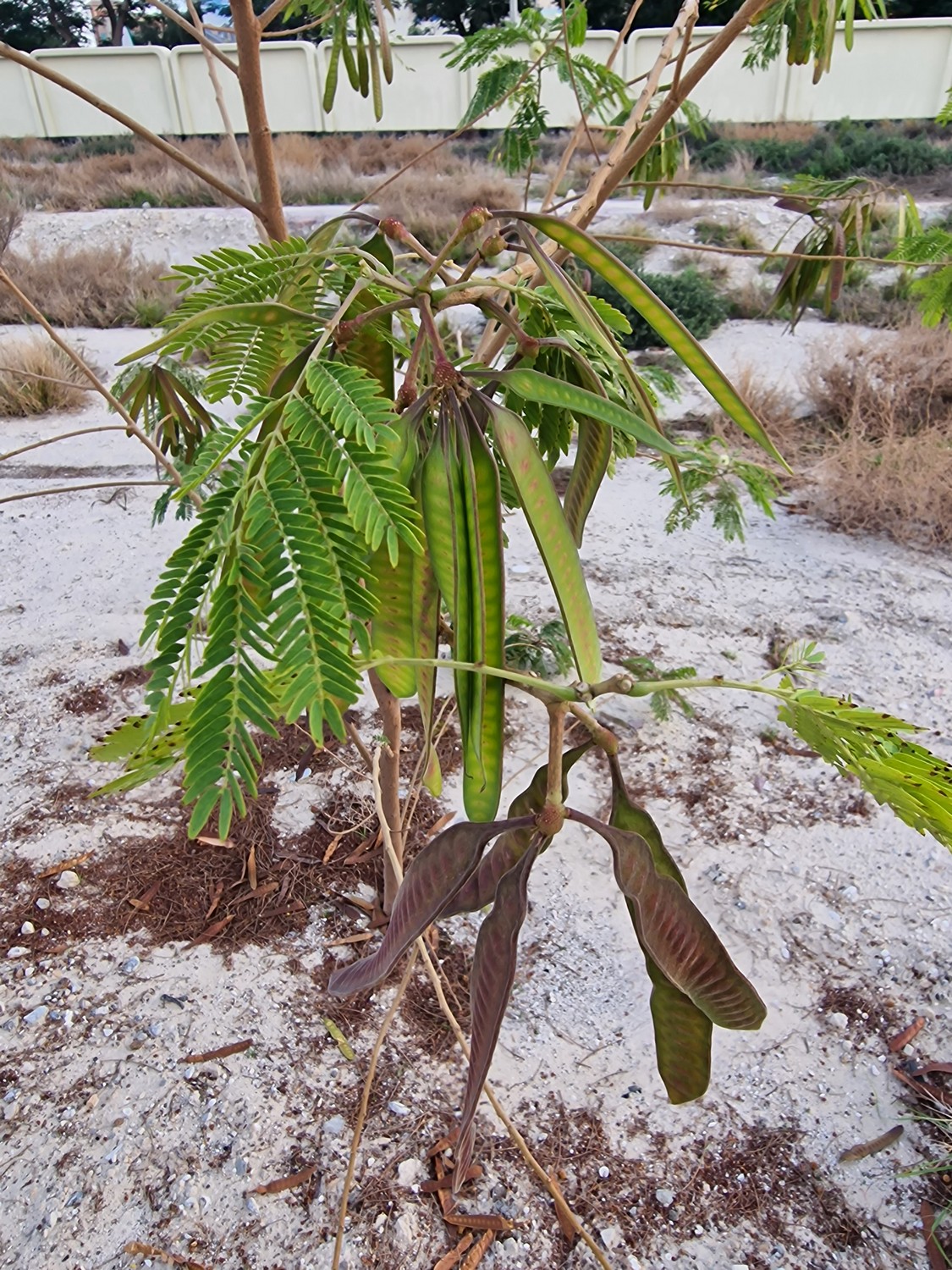
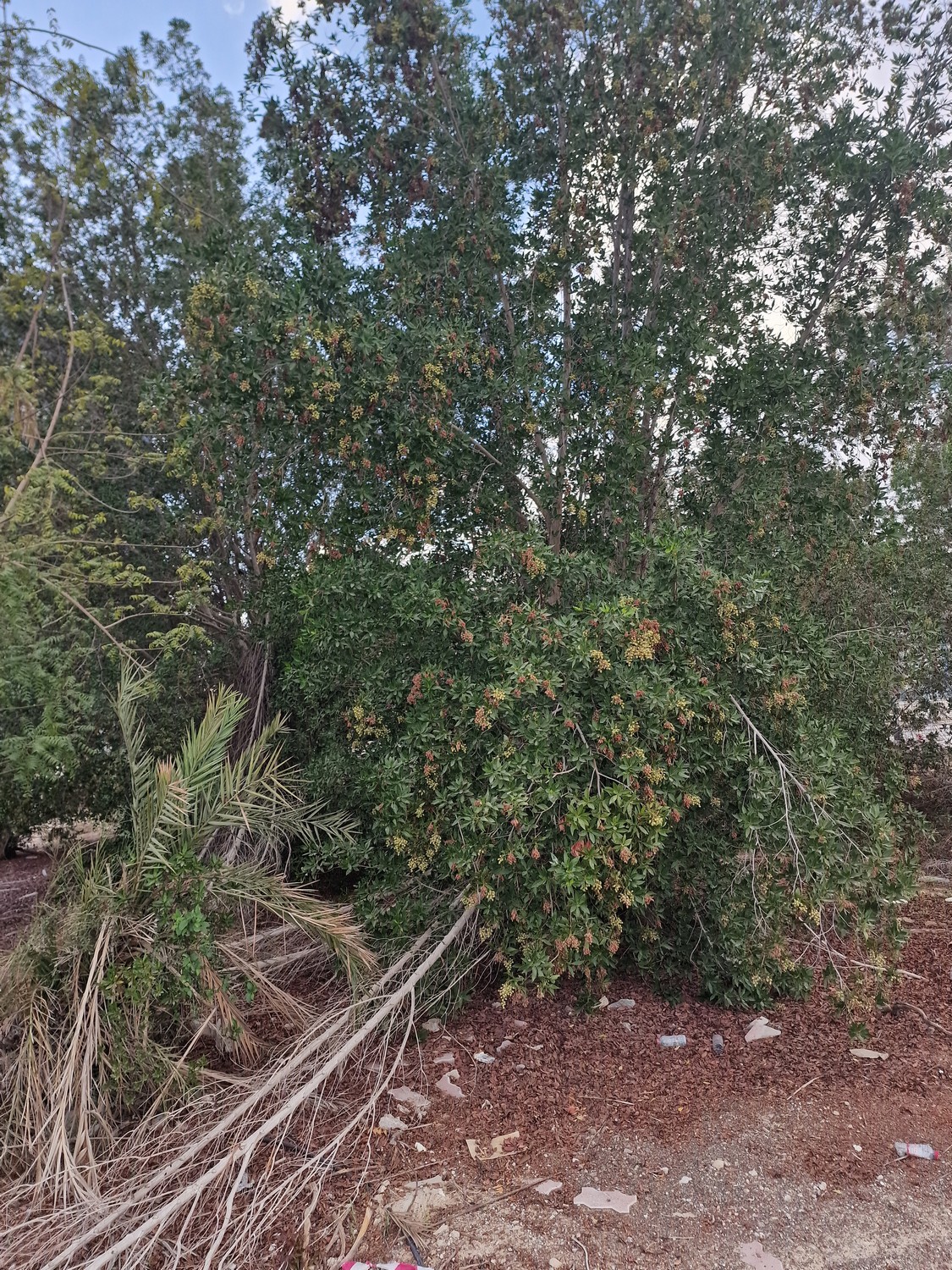
One of the first trees I noticed was perhaps the newest arrival – Leucaena leucocephala. The plants were thin, 1 -2m high, and probably only 2-3 years old, yet already seeding. This of course, is the characteristic of a pioneering species, designed to take advantage of disturbed ground. Because they don’t originate here, we label them invasive, but they are doing what they were designed for. What we have to do, is appreciate this role, and through careful intervention, ensure a succession takes place. This is all happening without irrigation and so is a fantastic asset, if only we would see it this way.
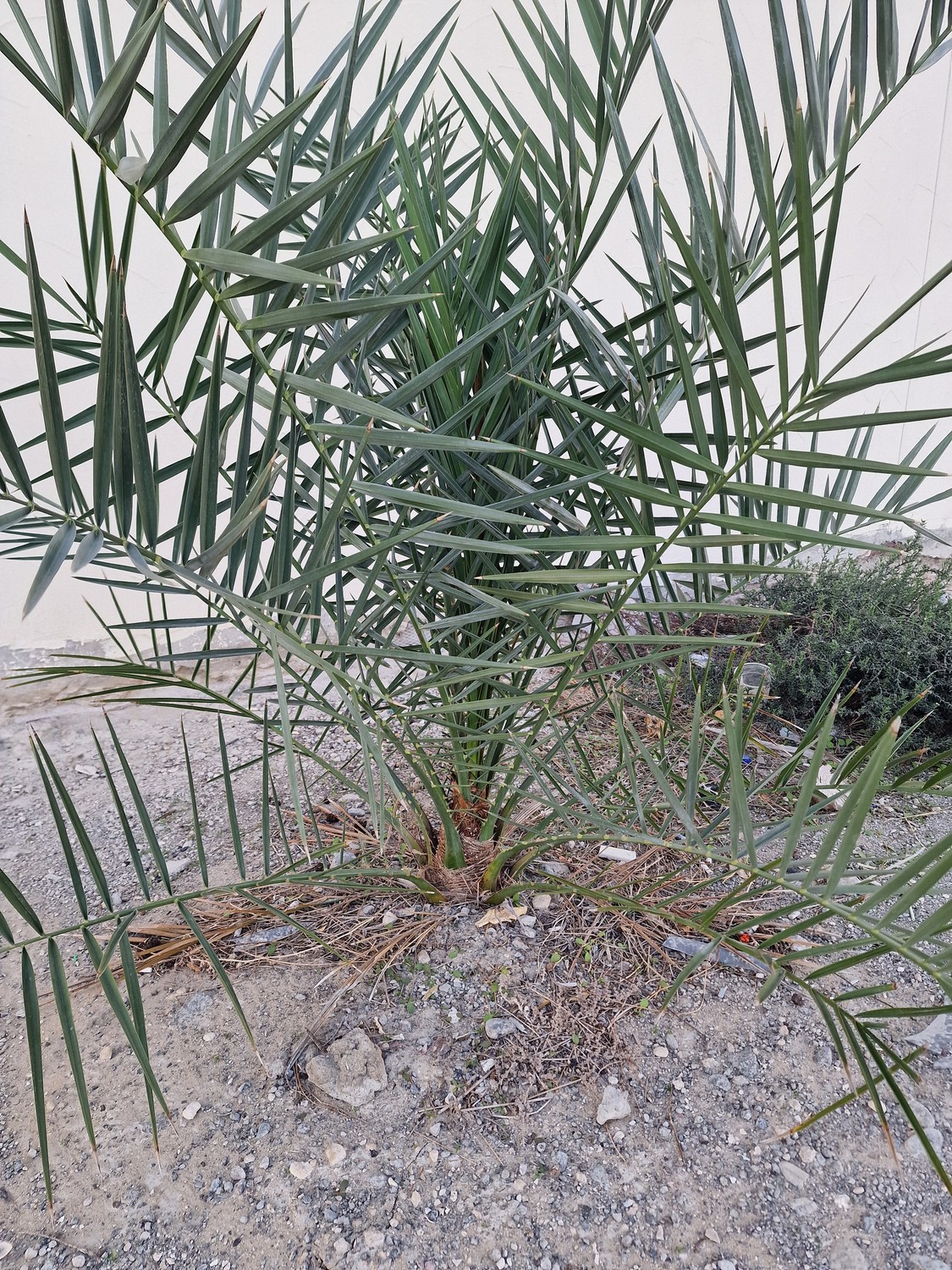
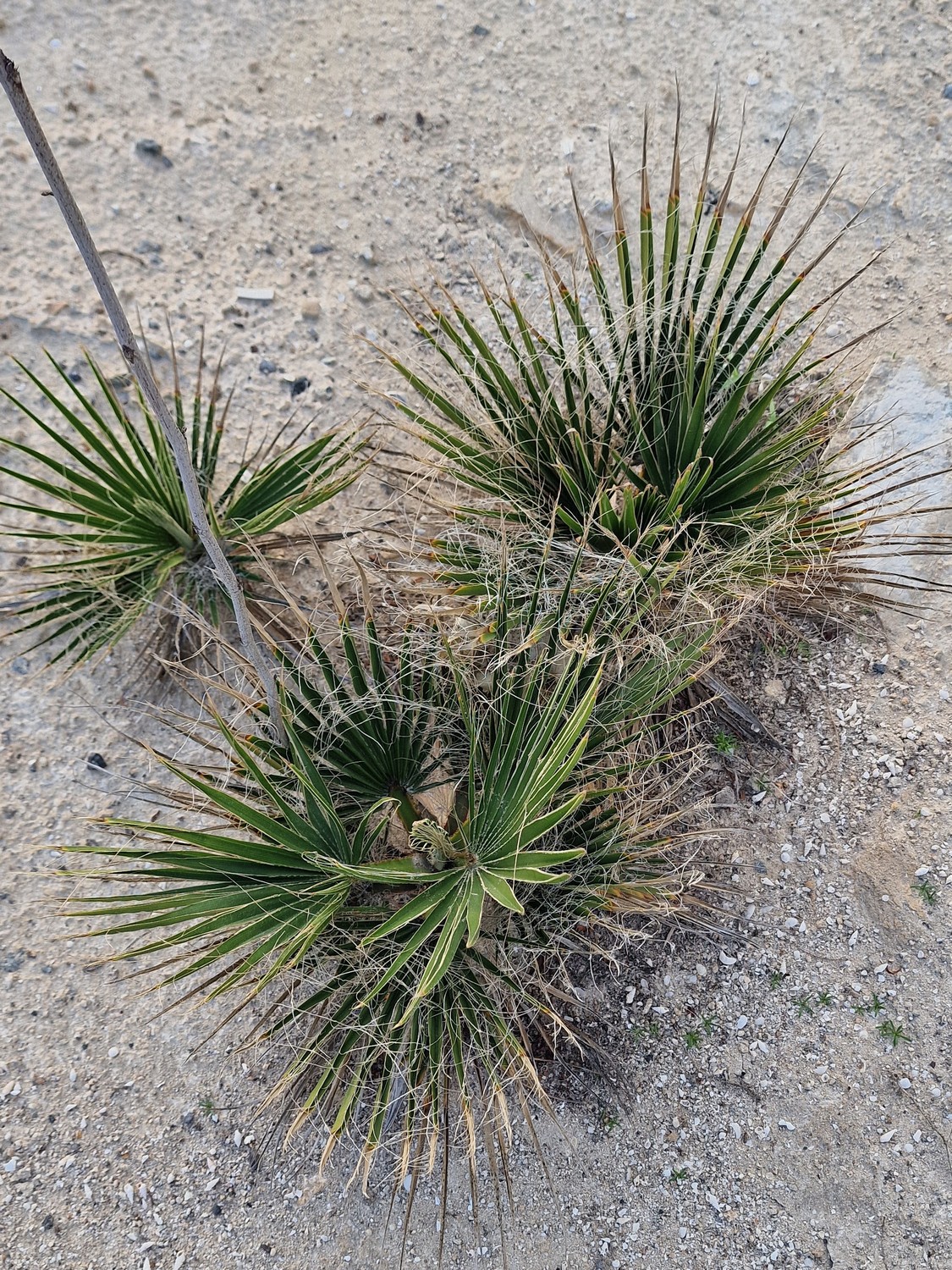
There were palms, mostly Washingtonia robusta, but there was a Phoenix dactylifera. These were also young and in their establishment phase. They will not put on height until they have ‘fattened up’ at the base and developed an extensive adventitious root system. Palms don’t have secondary growth (girth expansion) so once they start growing upwards, the stem diameter is fixed. it might take a decade before they put on height.
There was a beautiful Ziziphus spina-christi (Sidr), but this was older, creating a wide, spreading tree, perhaps 20-40 years old. Interestingly, despite many fruits, there were no seedlings around and this was the only native tree I observed. It was wide-spreading, as is their habit, and was creating an impressive amount of mulch underneath; this is how soils are built.
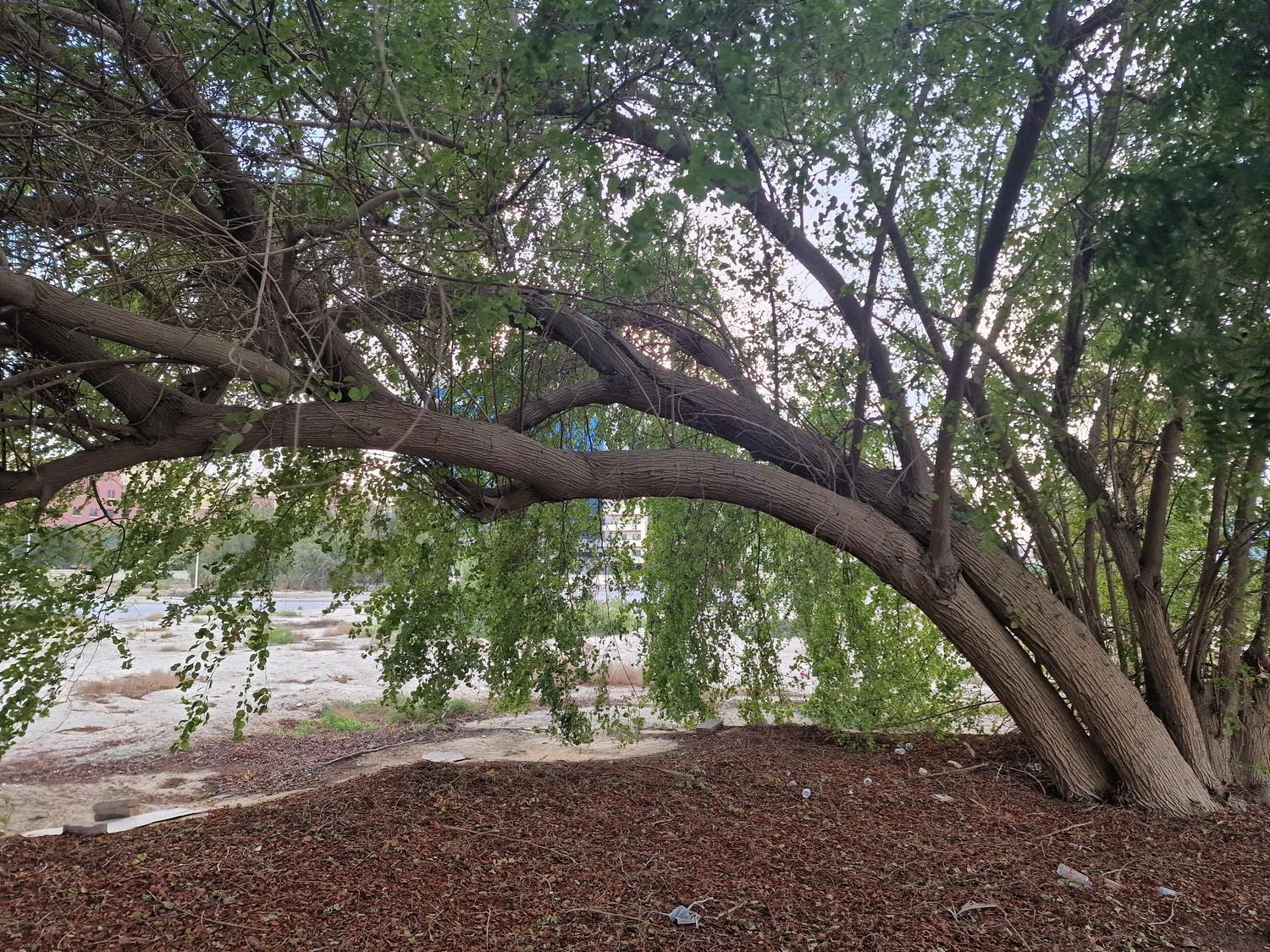
No neglected site would be complete without Azadirachta indica (neem), and indeed there were several, including some more established clumps, but also some younger seedlings. It’s one of those fast establishing trees that forms clumps, which create microclimate for other species to grow in or around.
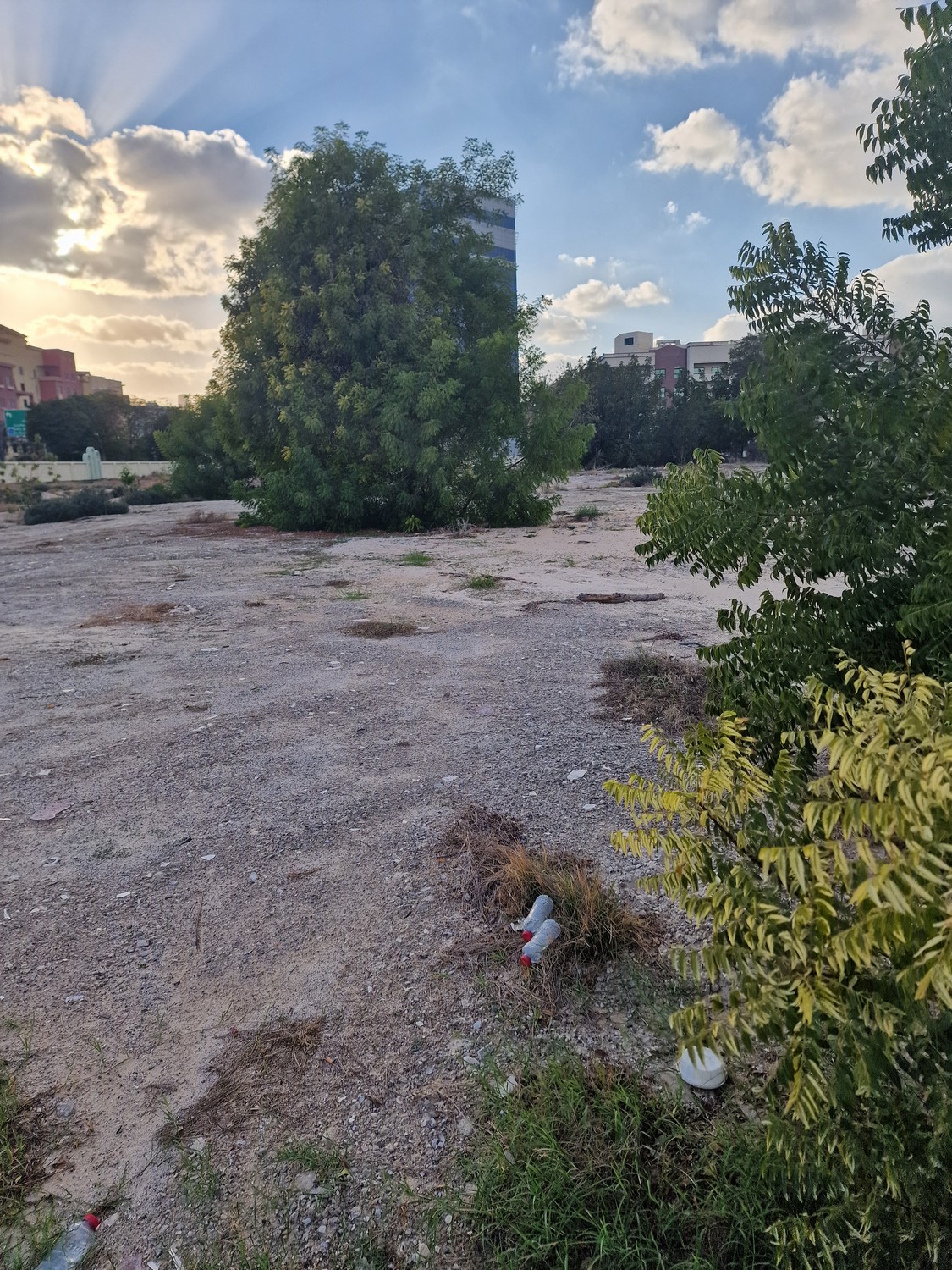
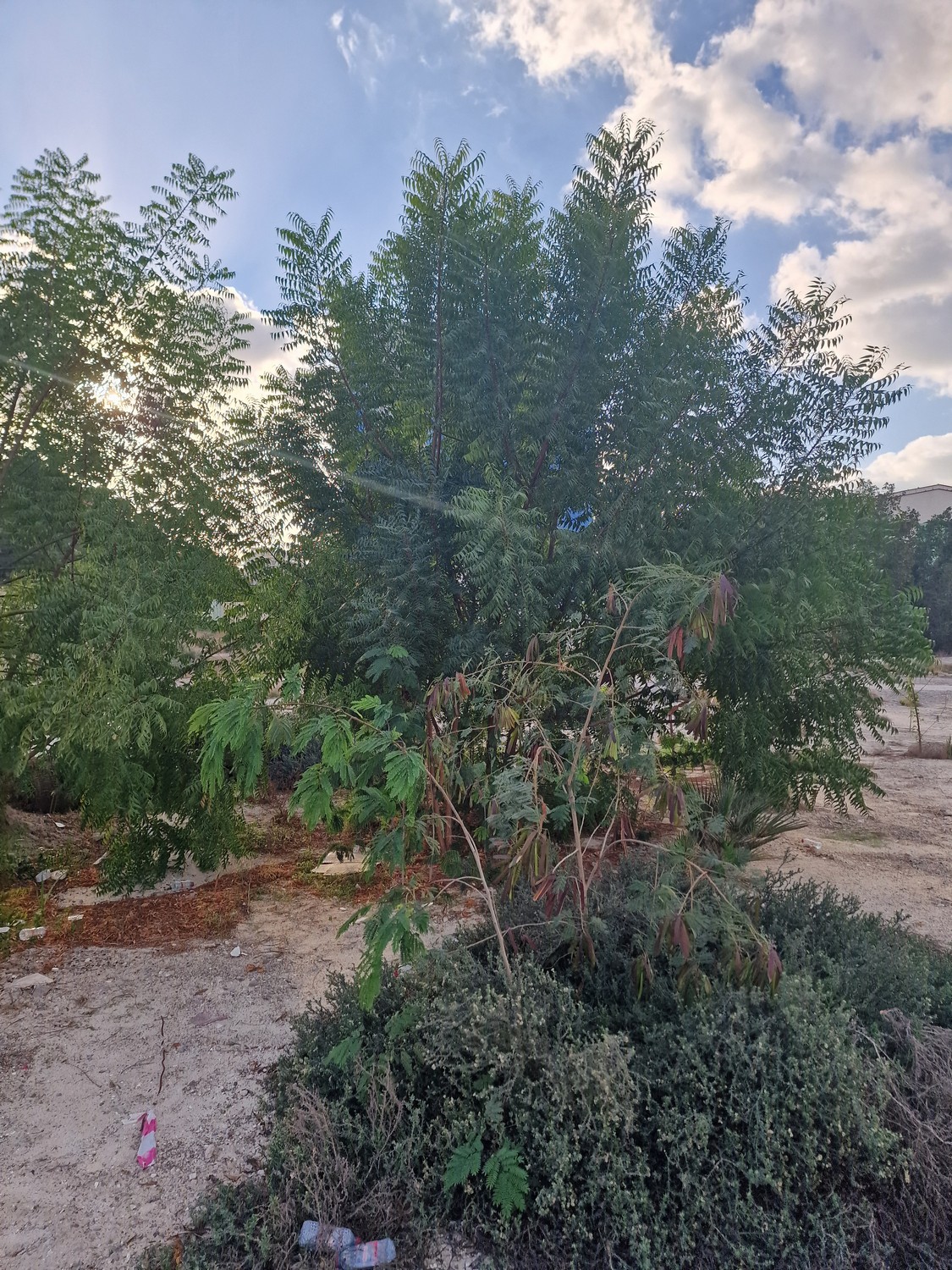
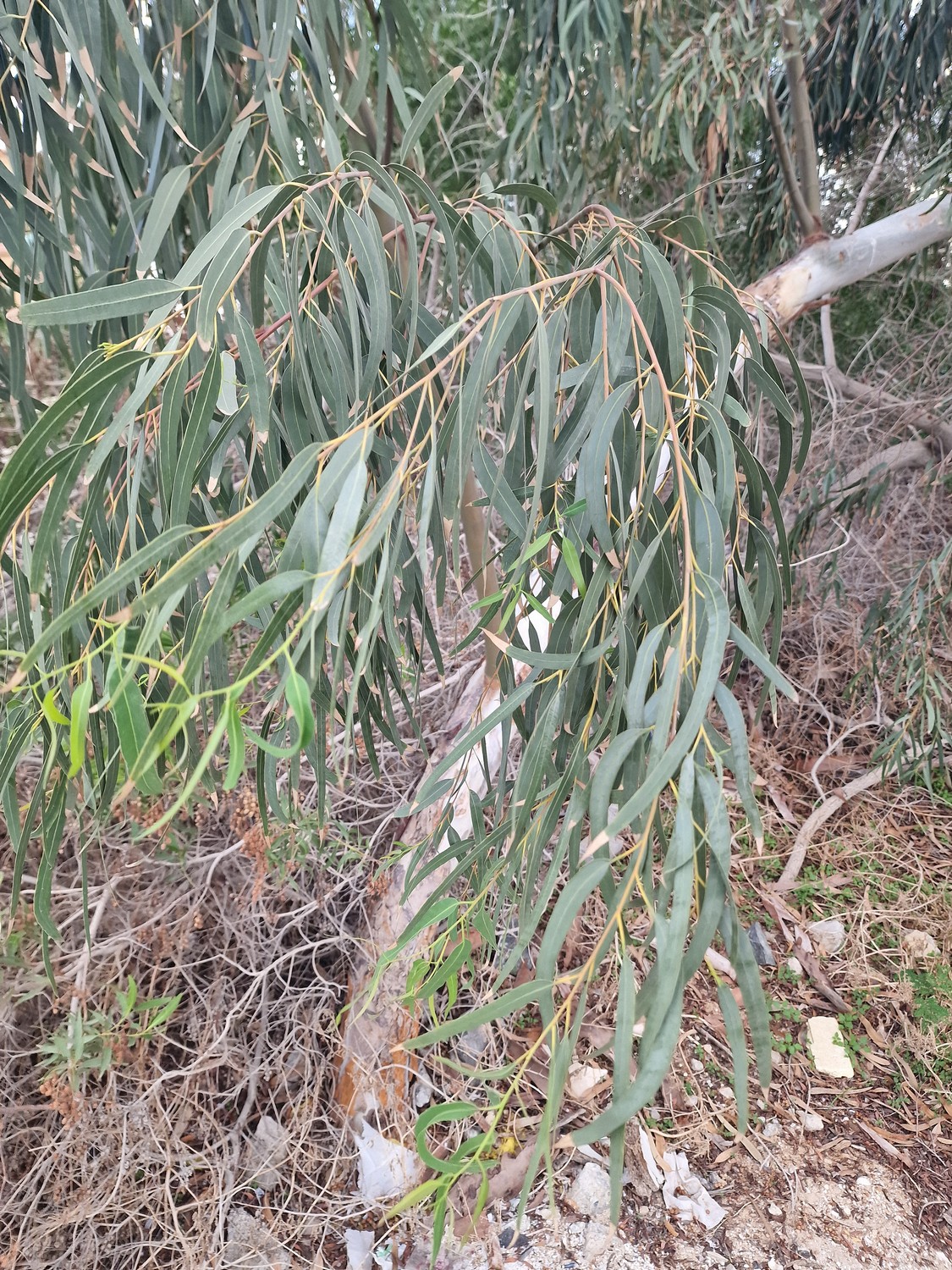
Other species growing on the site included damas – Conocarpus lancifolia and there was a young eucalypt – probably Eucalyptus camaldulensis, growing in the microclimate created by the larger trees.
A few of the usual suspects seemed to be missing, notably Neltuma (Prosopis) juliflora, mesquite, and Salvadoria persica (toothbrush tree). Also absent were Prosopis cineraria (ghaf) and Vachellia (acacia). There seemed little by way of native regeneration taking place, something I’ve observed on other sites.
Think about this, these ‘non-natives’ are doing a job here, of reclaiming waste ground better than many of the native trees can do. In an era of increasing climate crisis, that is of supreme value, yet we condemn it as undesirable.
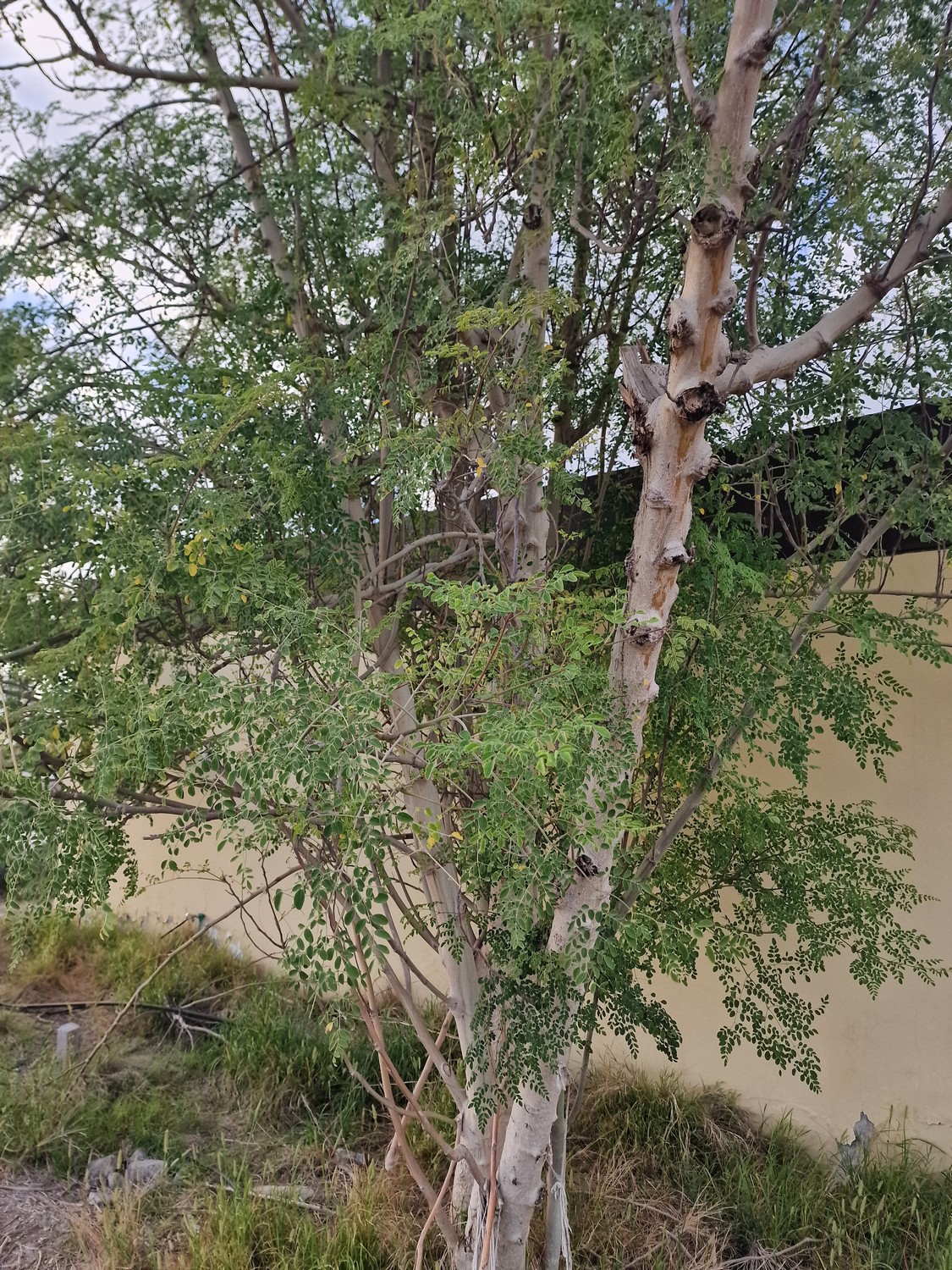
Walking on a bit, I came across a Moringa (M. oleifera or peregrina), which may have at one time been planted as there were old irrigation pipes nearby, and yes, some Salvadoria (not planted).
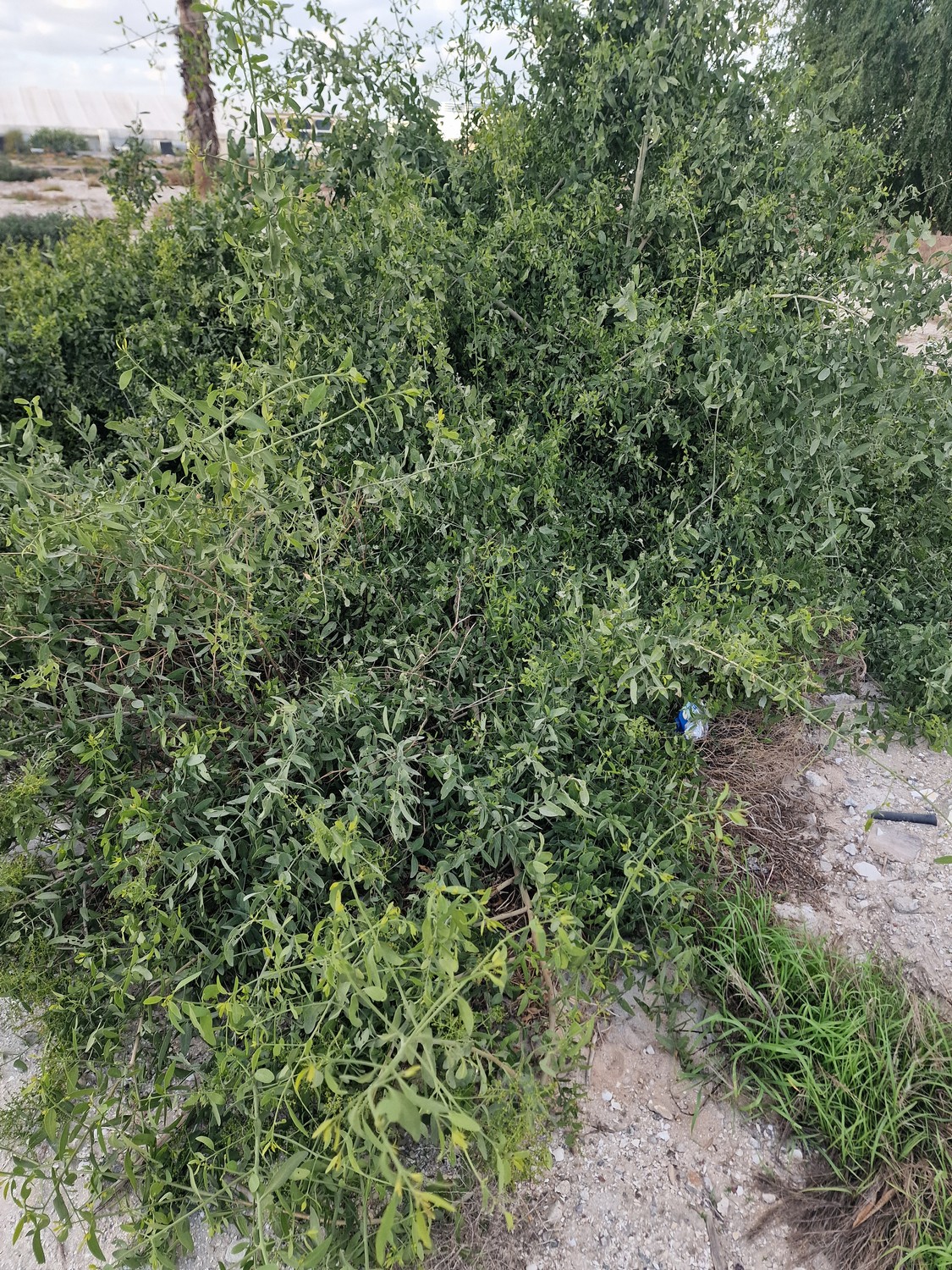
Walking across the site, there were many areas without trees growing, which were dominated by the usual low halophytic sub-shrubs – Tetrandra (Zygophyllum) etc. I have no doubt that if left alone, the trees would spread further, finding suitable microclimates within in which to germinate. Such is the nature of establishment and succession.
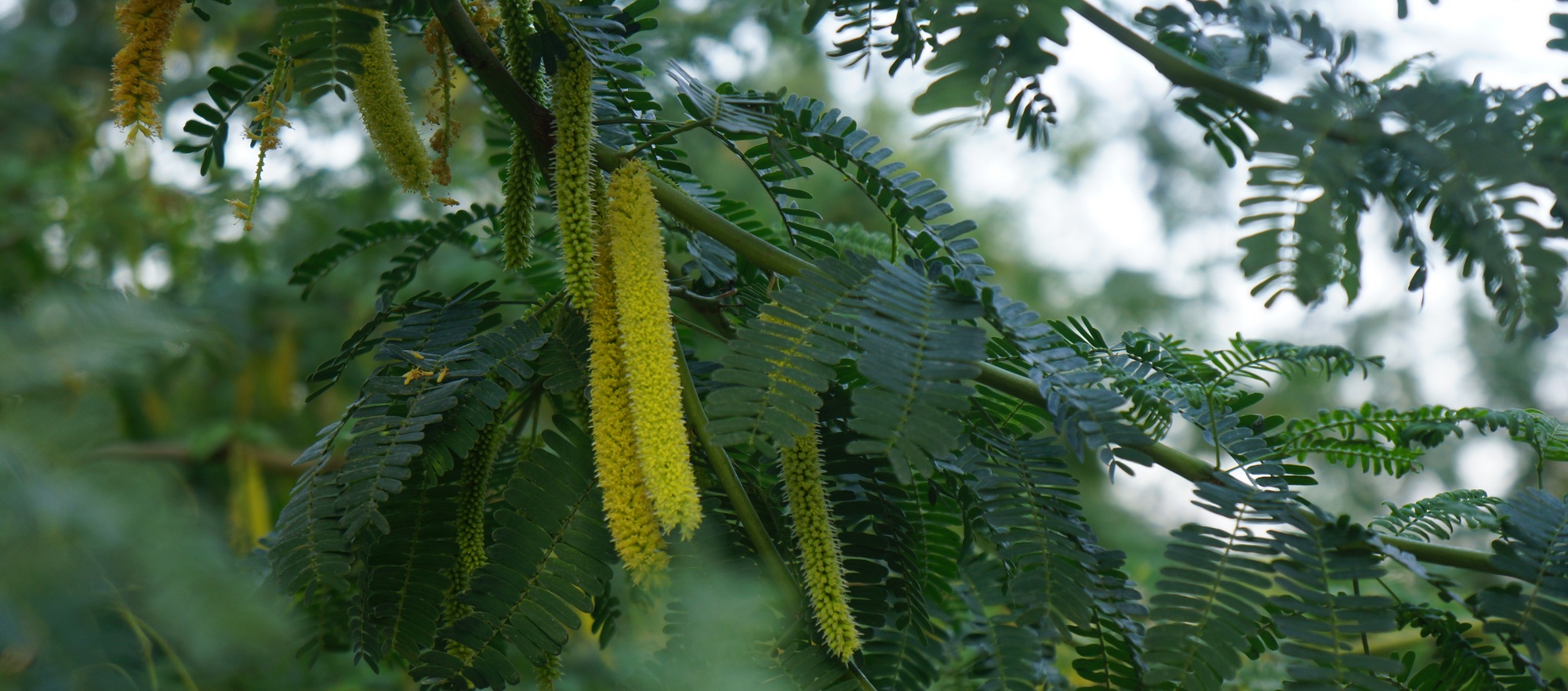
And finally, at the edge of the site boundary, I came across some Neltuma juliflora. Somehow, it made the experience complete, though I can hear the groans. Up close, the flowers and leaves are beautiful.
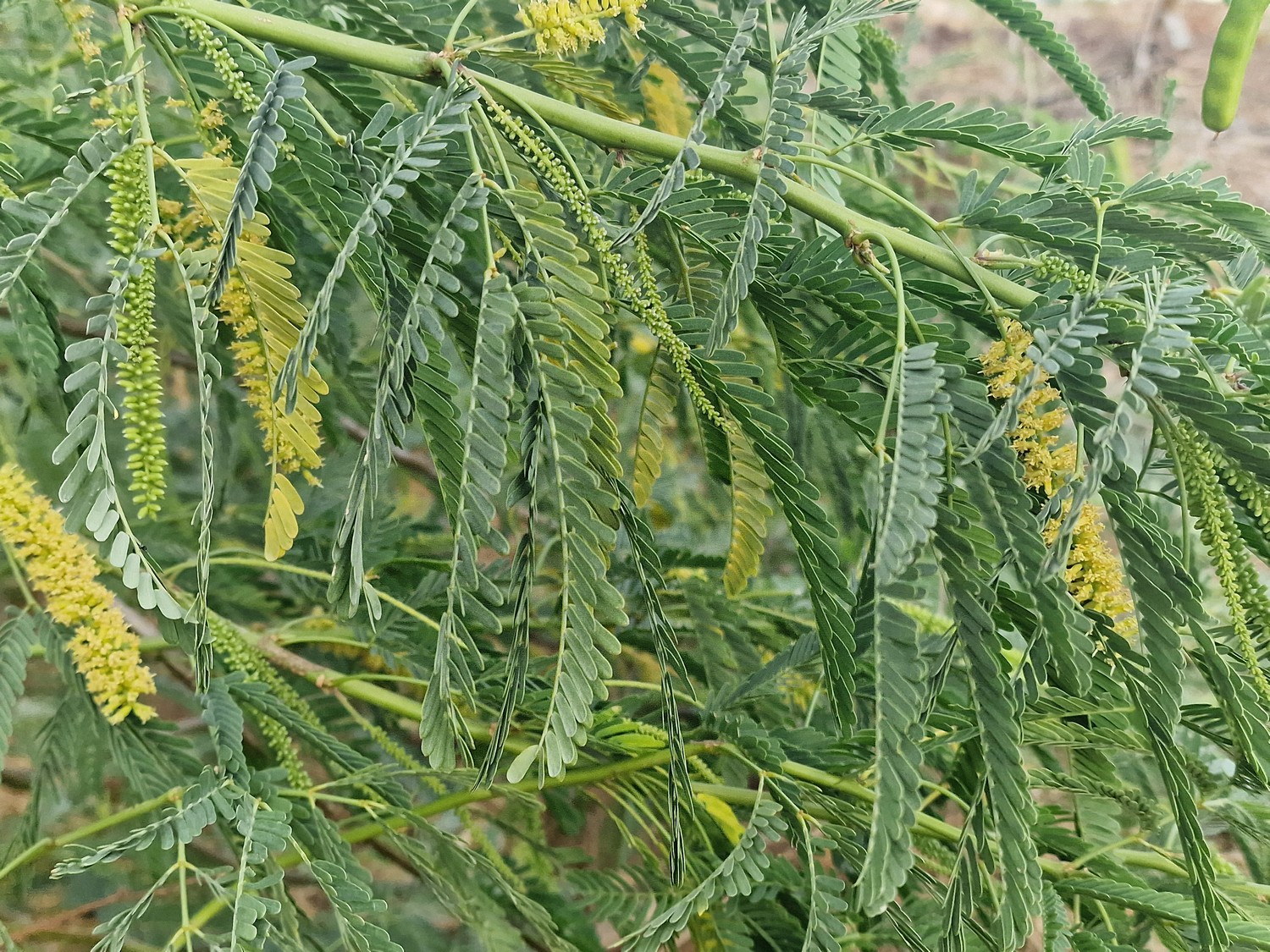
I have no doubt these trees are transient, that there will be further development and they will be wiped away. What it tells me is that, should we give nature the chance, it will build ecosystems with whatever tools (seeds) comes to hand, be they native or not. When the site is a mix of native and exotics, what arises is called a hybrid ecosystem, and when it is all non-native, it is a novel ecosystem. Either way, it holds true the old saying, that nature abhors a vacuum. We shouldn’t interfere, thinking (erroneously) that we know best. As I keep reminding myself, there is only one invasive species, and that’s us. Somehow, we keep damaging the adaption and healing that nature tries to do. I hope that observation of sites like this will make us all think a little more deeply about what we do; sometimes, less is more.