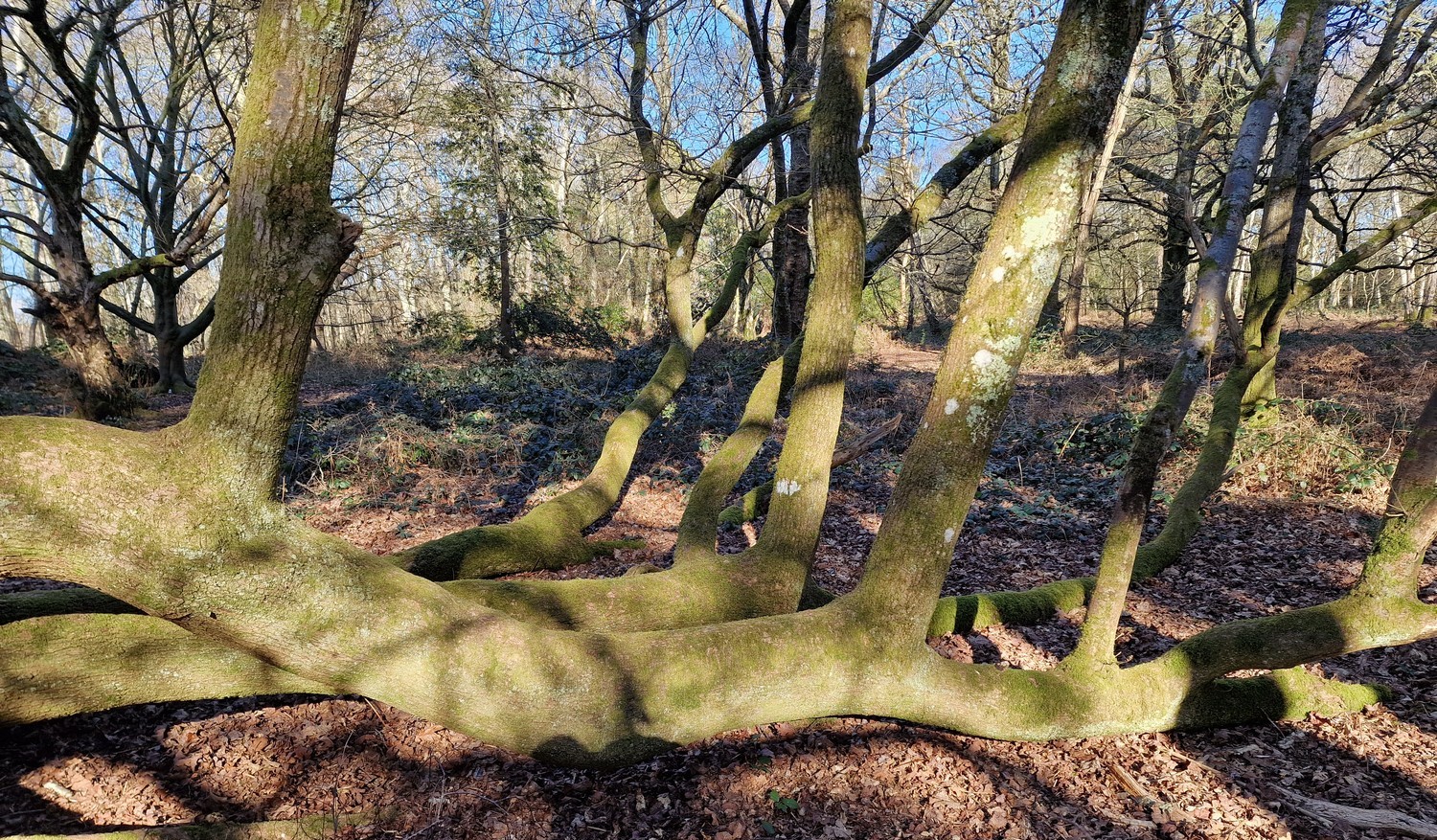
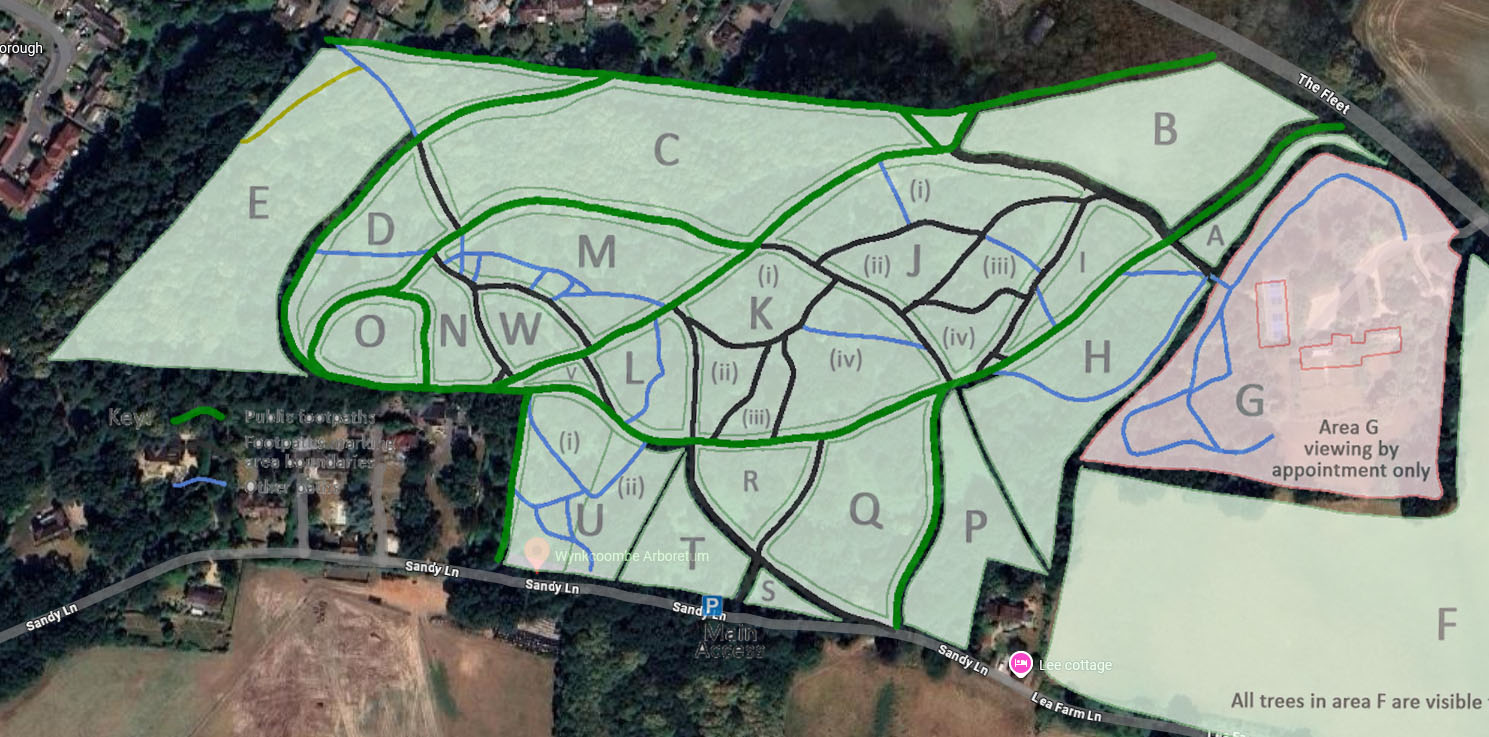
There is a local arboretum at Fittleworth, West Sussex, called Wynkcoombe Arboretum. It’s unlike any other collection of trees and is all the more interesting for it. For a start, it is totally open to the public, set within a wooded hillside and appears not to be curated, though the QR tags on trees tell otherwise. It is the life work of Nicholas Smith, who started planting trees there in the mid 1970s. I find this a bit odd, as I was an arborist in the area in the early 80s, yet had never heard of it until last year (thanks to Amelia Williams). There are some amazing and unusual trees here, but today, I am writing about the windthrown oaks and their phoenix regeneration.
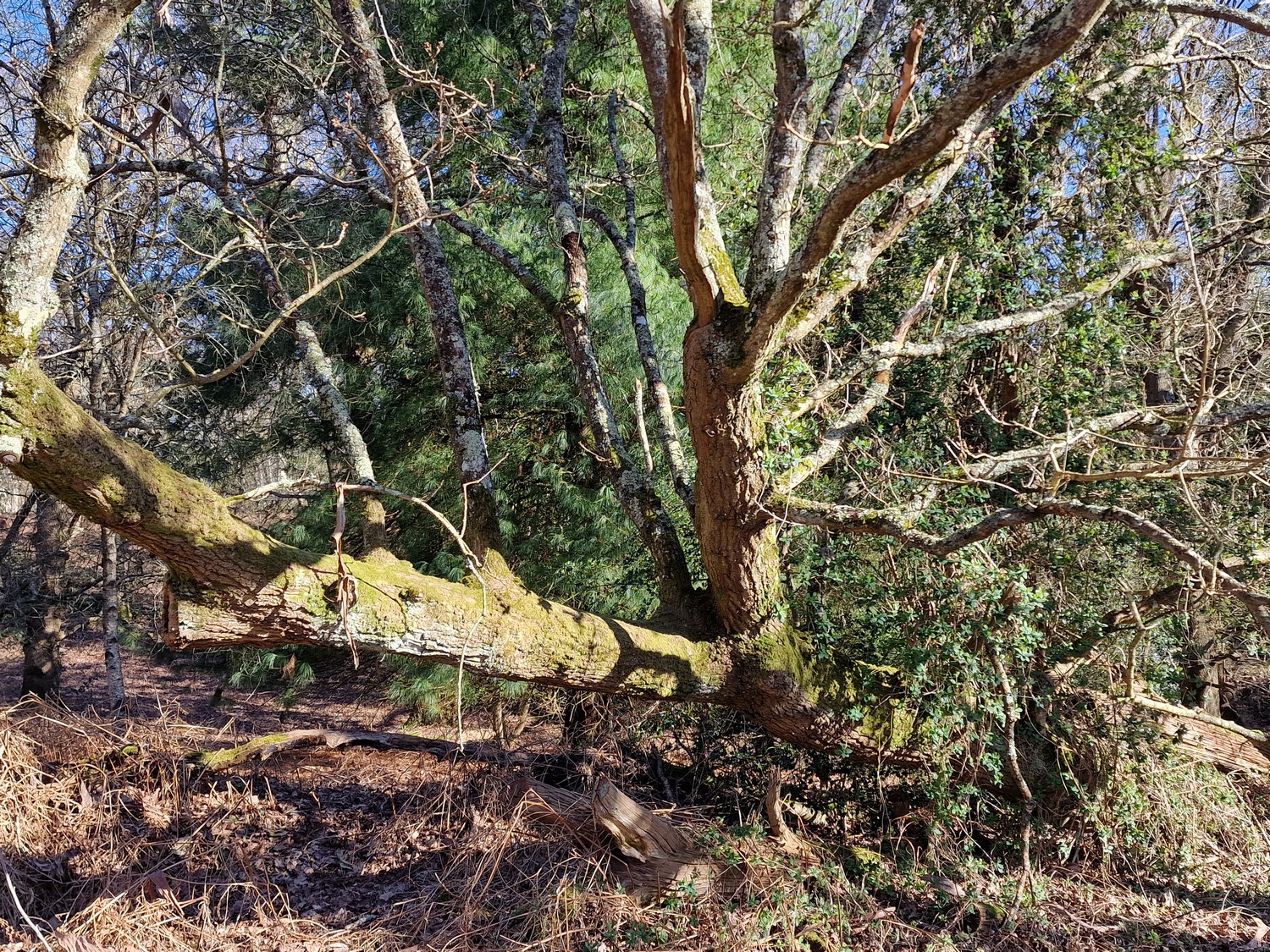
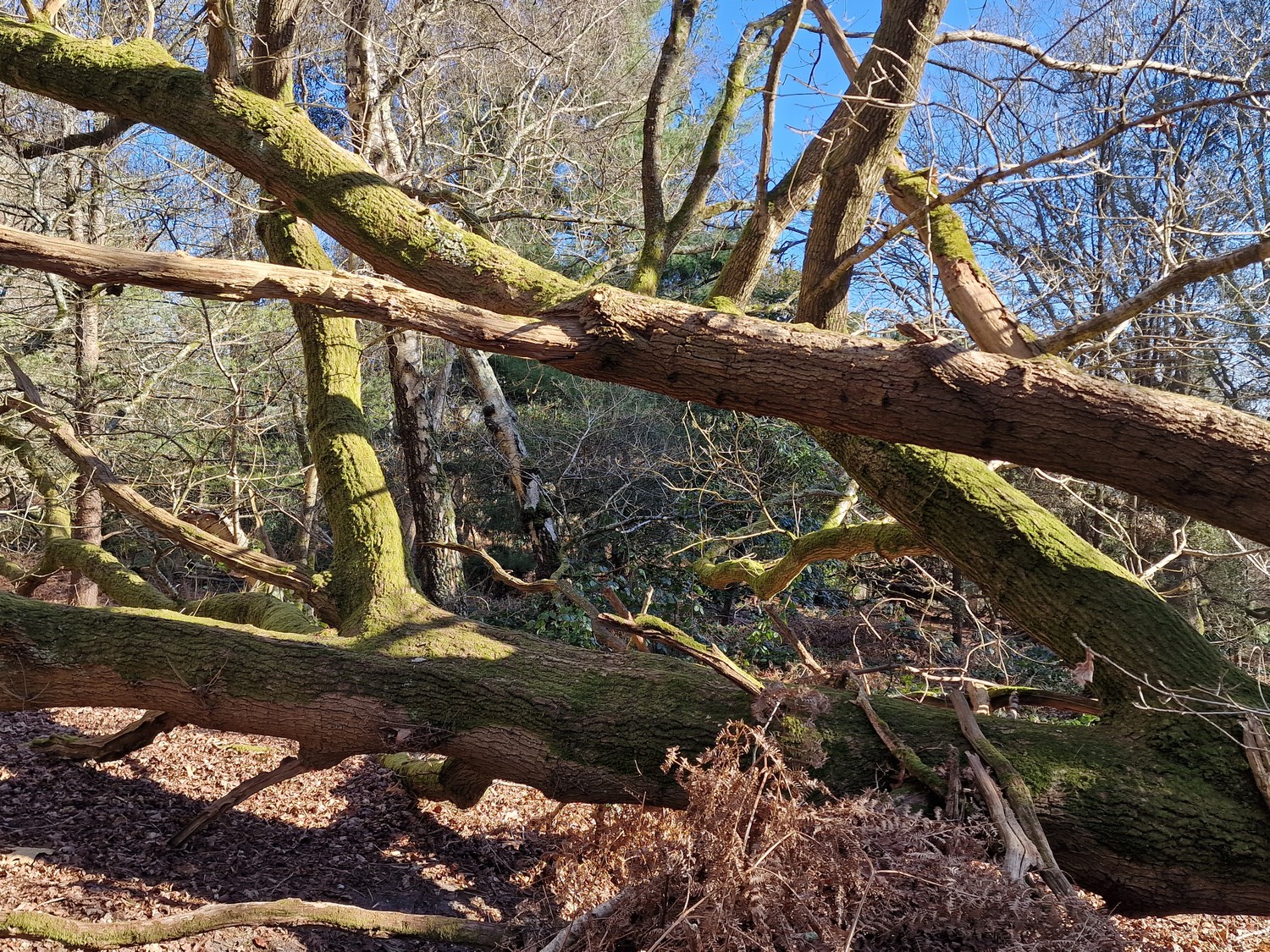
These oaks blew over during the great storm of 1987 and fortunately, were left as they fell, since when most have regenerated new crowns and continued growing. After this and subsequent storms, there was great effort to clear away fallen trees, which was a mistake in many non-urban areas. I recall a few years after, walking in a NT woodland not far away (Storrington area) and watching a bulldozer clearing away fallen birch, no doubt to enable replanting. Thing was, it was tracking over thousands of naturally regenerated birch seedlings to do this! Wynkcoombe shows how woodland recovers when simply left alone. The morphophysiological response of the tree is to reform a new crown by adaption and through new iteration.
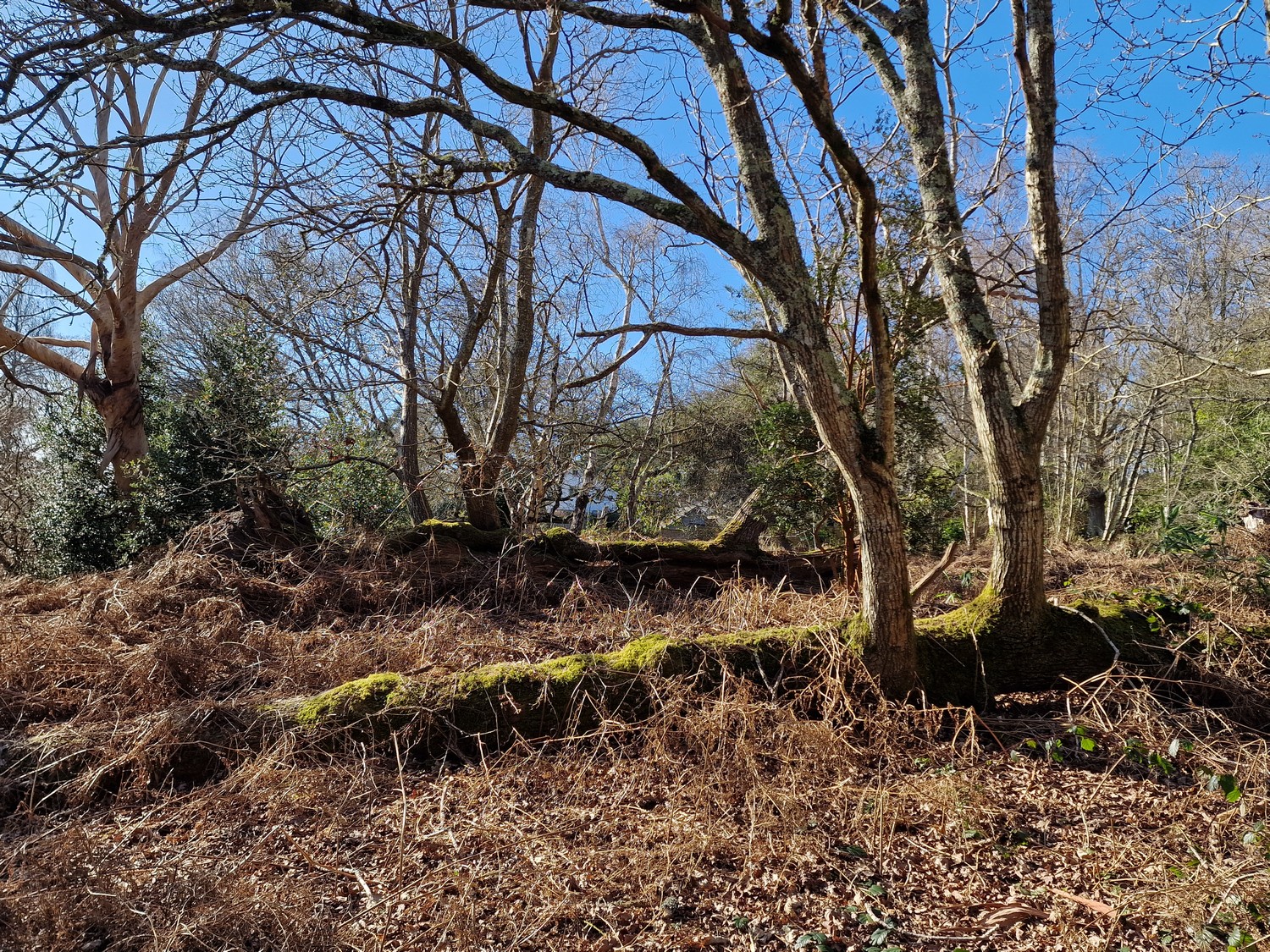
An uprooted tree is thrown (literally) into a survival crisis. There are several ways a tree may fall, by fracturing of the main stem, or more usually by lifting of the root plate. The latter is more common and generally more survivable, providing some roots remain in the ground. Occasionally, a tree may split and fall in two or more pieces, which then regenerate (see below).
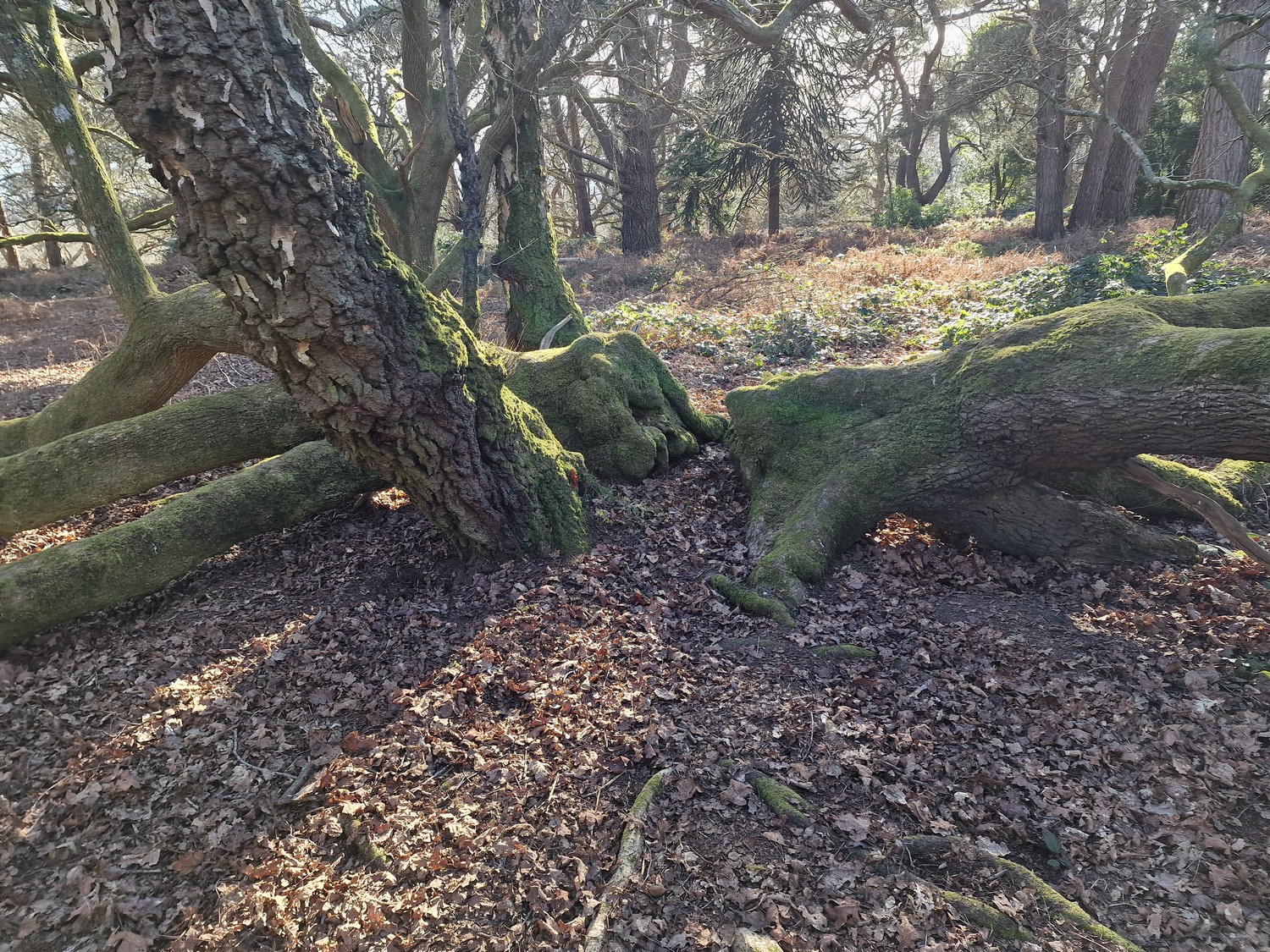
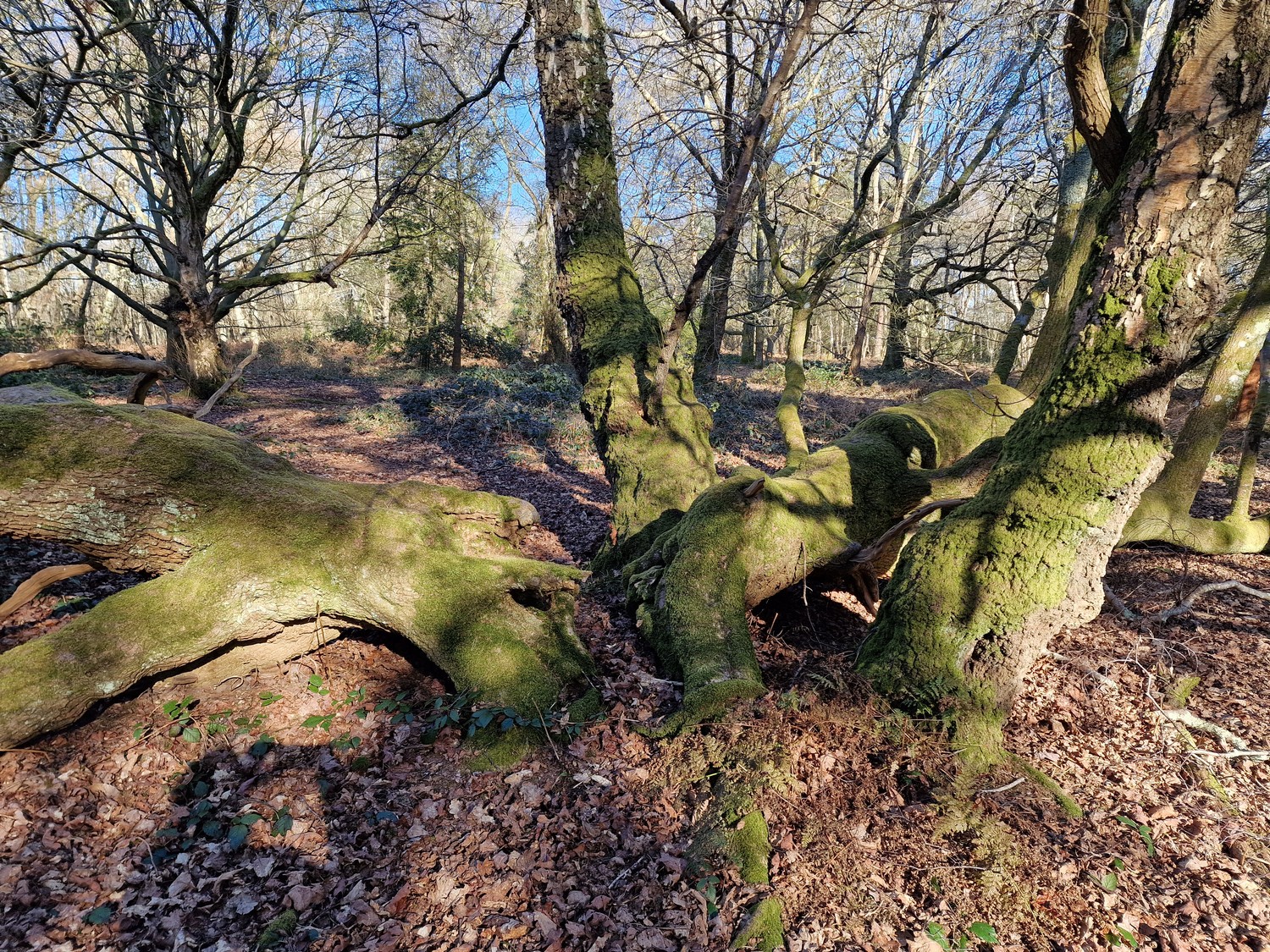
Some trees have lower branches which eventually get too long and heavy, and split out. If they are still partially attached to the trunk and some sap flow, they will often root (assuming there is enough light) and continue growing, as in the next picture. As explained further down, oaks are slow to root like this.
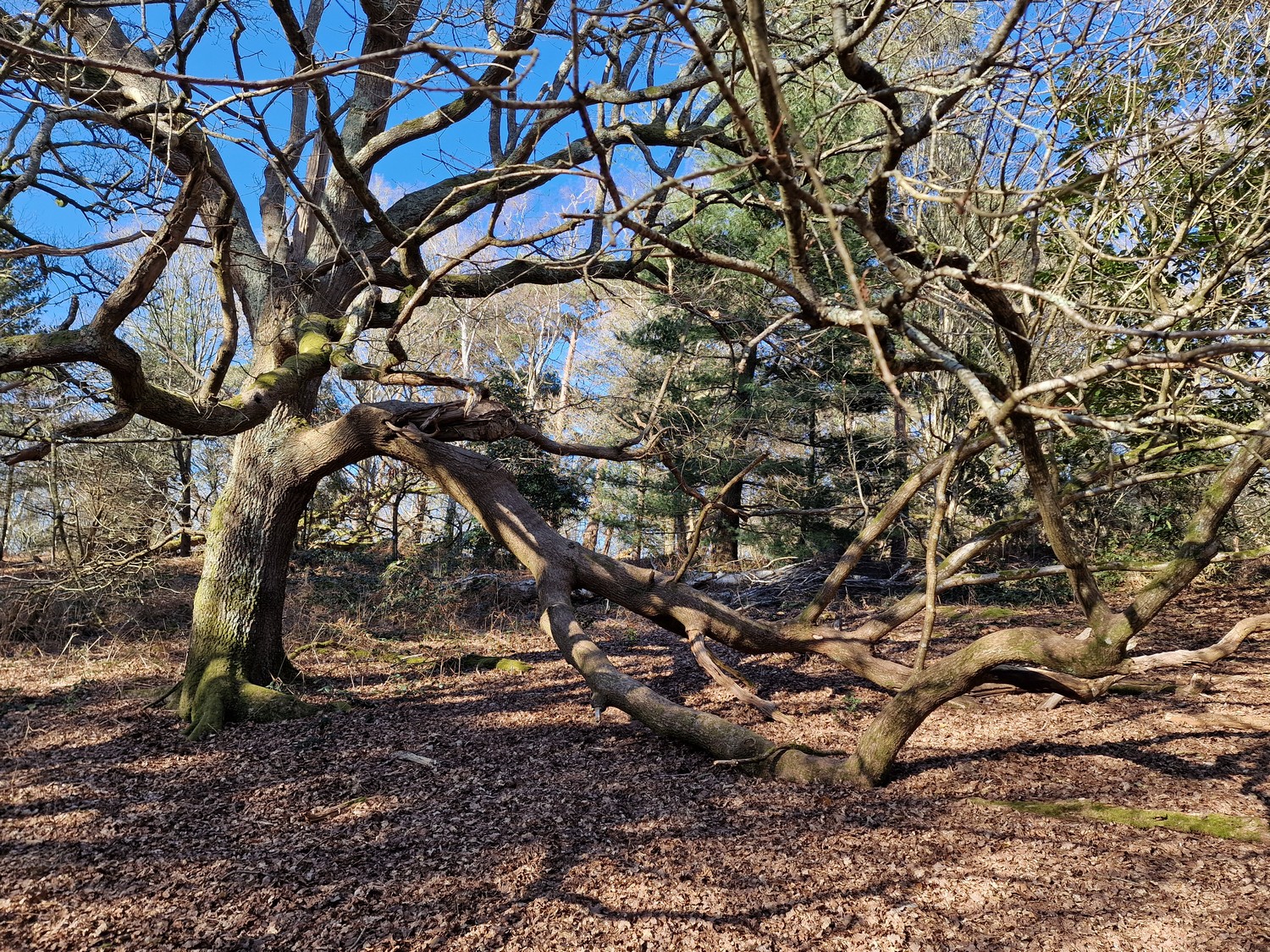
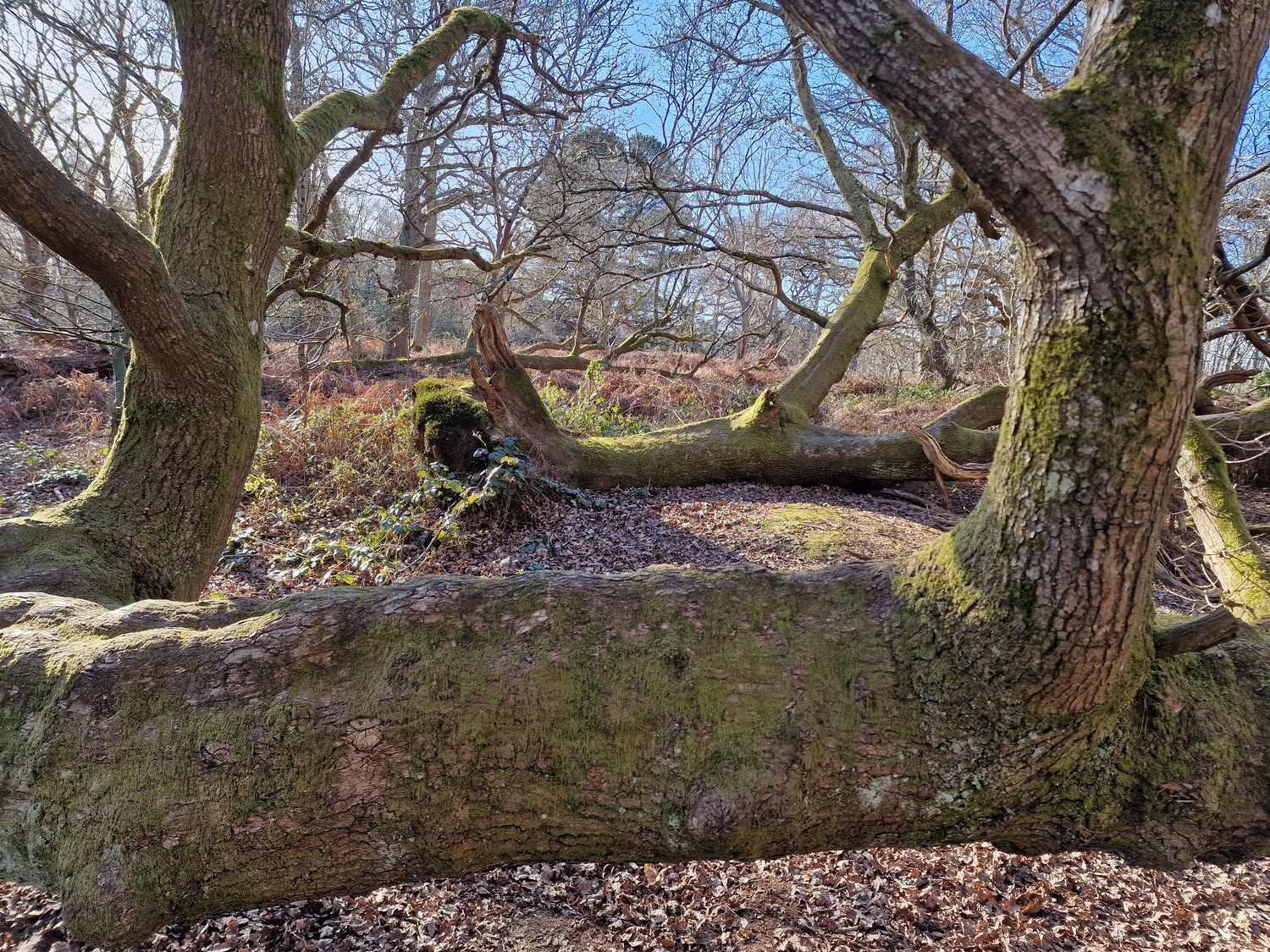
In certain circumstances, something interesting happens, in that the direction of sap flow reverses. This happens when a tree falls and branches become embedded in the soil. If they then root from adventitious buds, of necessity, the direction of sap flow (ie in the xylem and phloem) must reverse within that branch. It does this via a process called hydraulic redistribution which is triggered by osmatic potential and transpiration pull, In following years, secondary meristematic growth is orientated as now required. Trees such as willows easily produce adventitious roots, but for oak trees, this is more unusual. It does happen though, as can clearly be seen in the photo below.
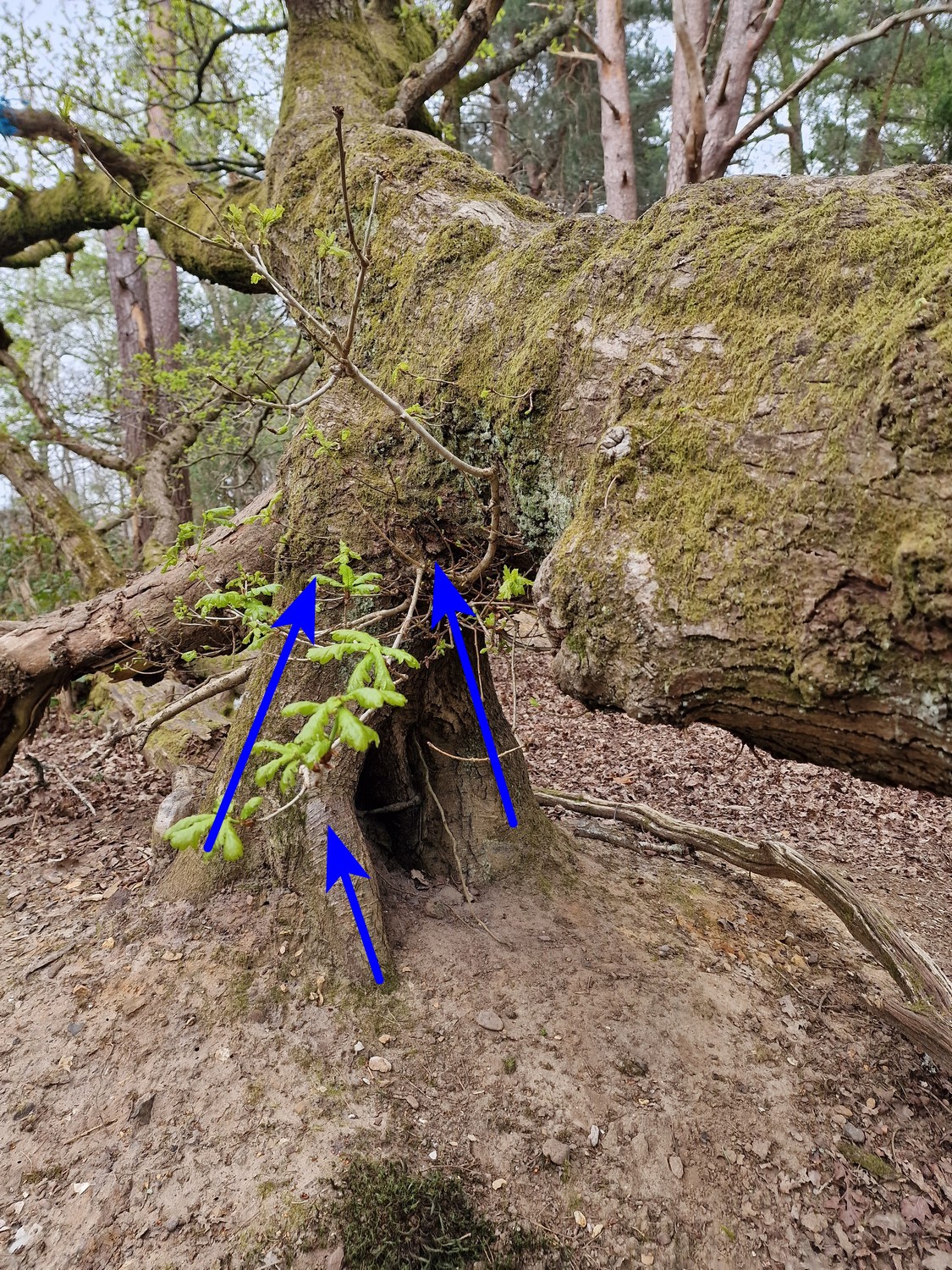
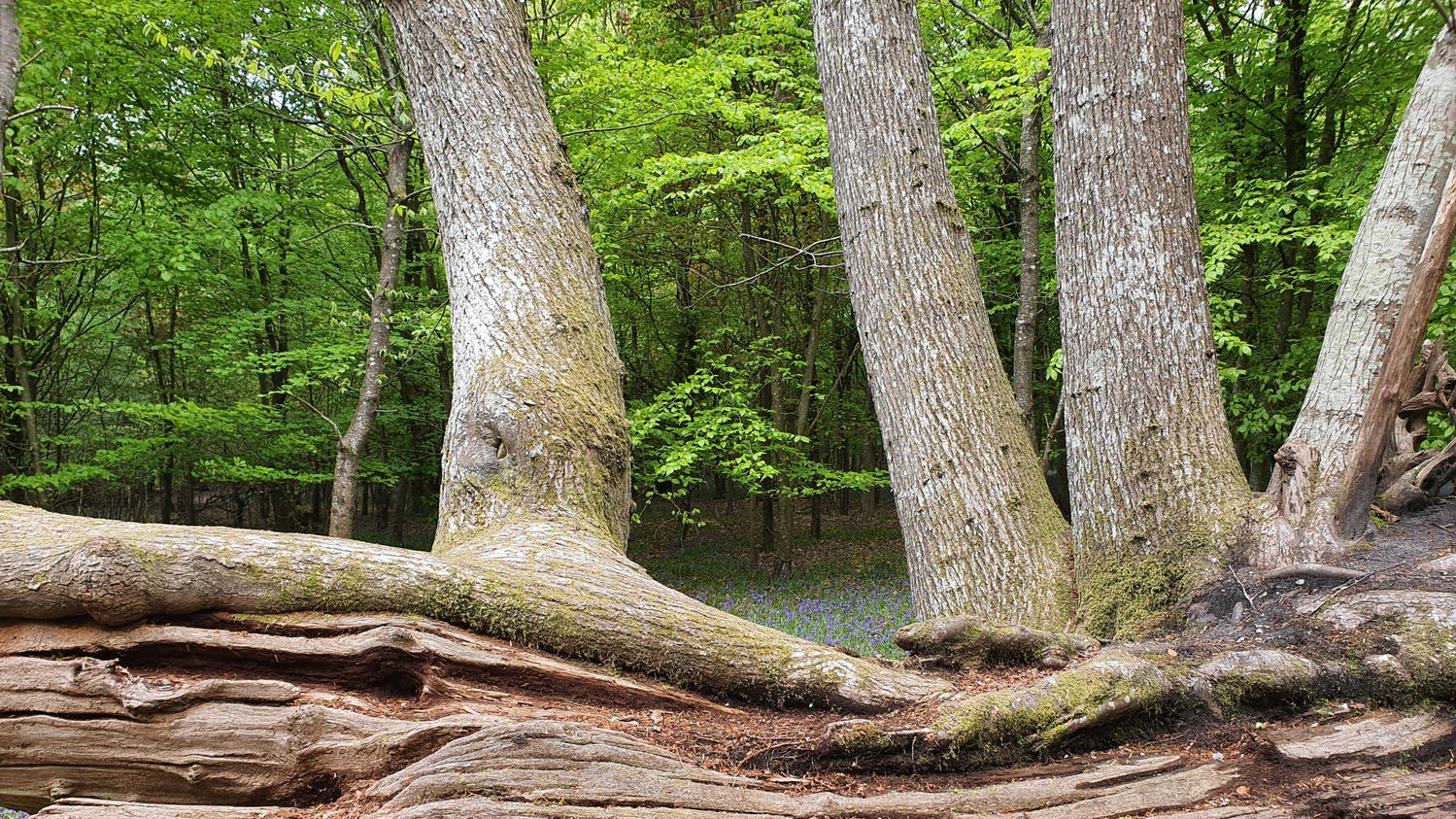
When a tree falls, the exposed rootplate is exposed to the air and the remaining torn roots seal off and die. Yet this is an opportunity for others and often you will find trees seeding in this raised mound. In the picture below, this fallen oak hosts a young beech and holly which are growing out of the old rootplate. This is quite common, so is either a microclimate/nutrient advantage, or it gives a measure of protection from browsing.
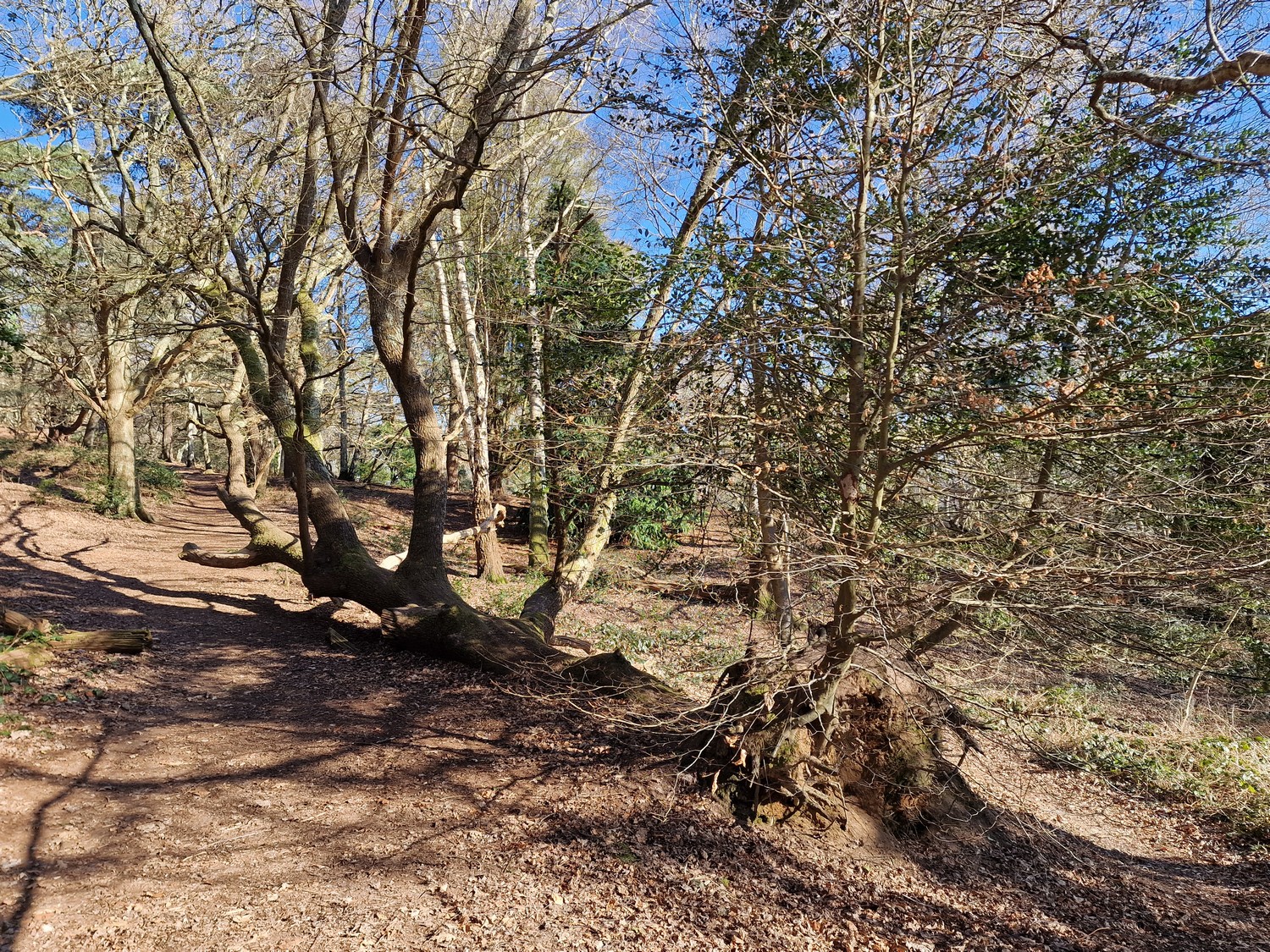
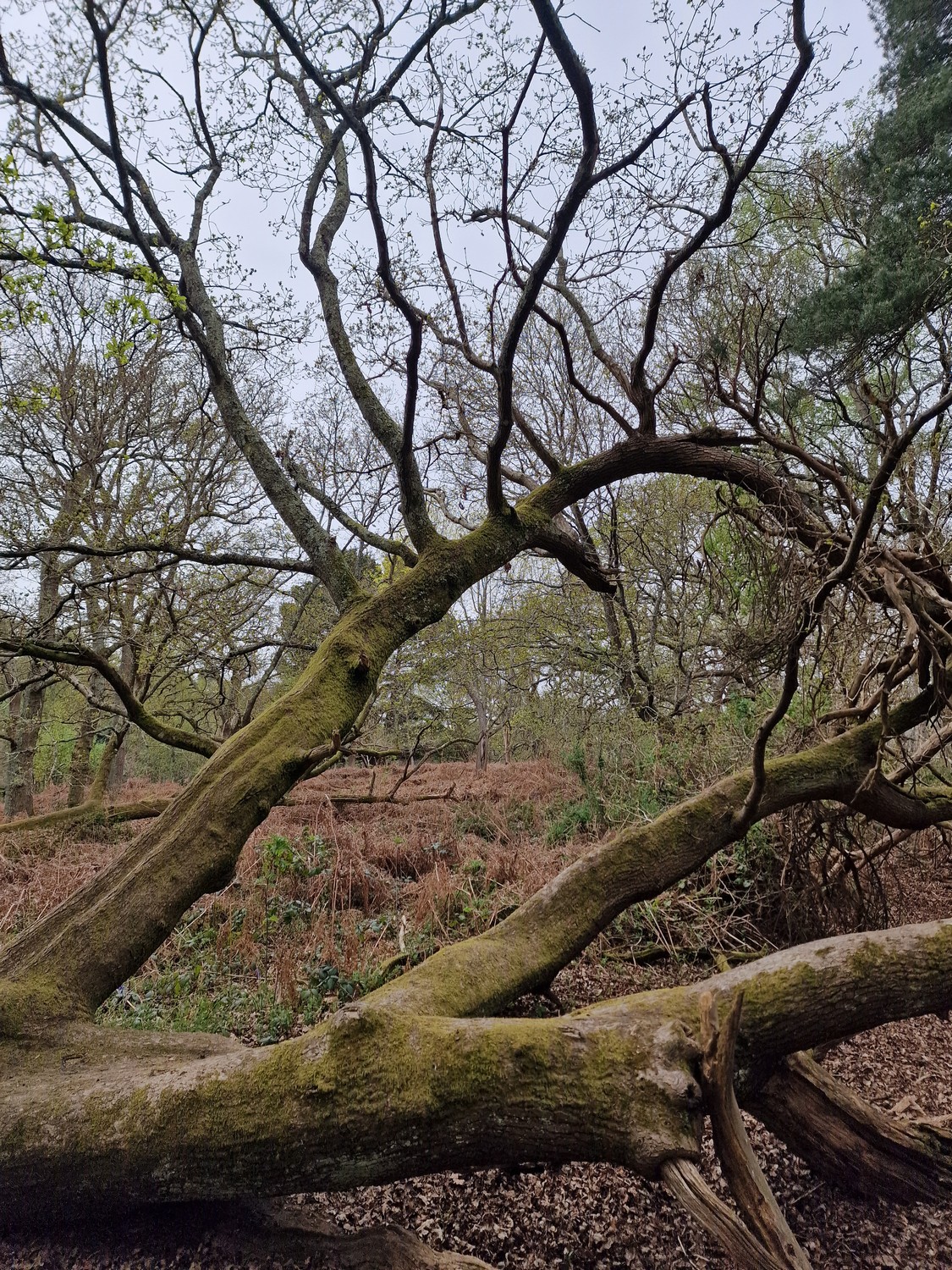
I’ll leave you with a few more pictures of the phoenix oaks in this this amazing arboretum, plus a link to a previous blog post which explores in some detail the phenomenon of phoenix trees across different species in the UK and the Middle-East.